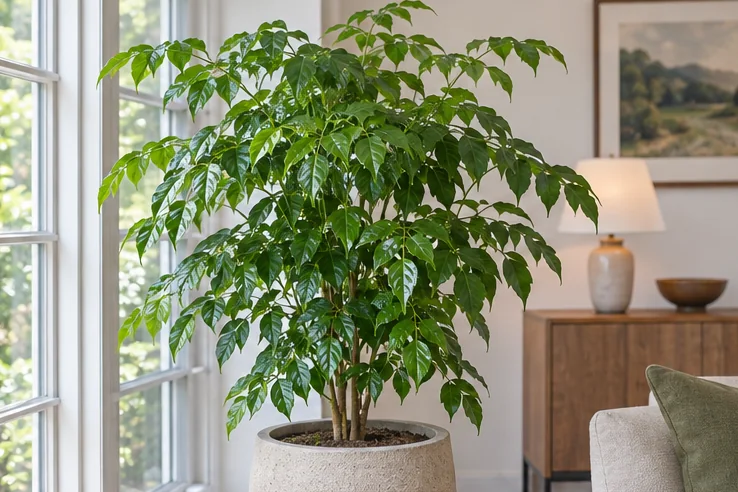
Give a China doll plant bright filtered light, relatively steady room conditions and a pot that drains. Check the mix before watering so the roots receive moisture without sitting wet for long. The plant can drop leaves when its environment changes. If that happens, inspect light, temperature, soil and leaves before reacting.
The species is Radermachera sinica. It makes glossy compound leaves, which are leaves divided into several leaflets. It can grow into a tree outdoors in suitable climates. The potted plants sold for houses are smaller specimens that need room for new shoots and enough light to hold their shape.
Pick a spot with steady light and temperature
Place the plant near a bright window with some protection from the strongest direct light. Check whether the leaves are close to cold glass or in a draft from a door or vent. Changes in light or temperature can occur even without moving the pot, such as when you begin using heating or air conditioning.
Leave space around the foliage so you can examine the inner branches. When a large potted plant fills a dark corner, the leaves facing the window may receive more light than those on the room side. Observe which part is growing strongly before making a change. If you move it to more light, introduce the new exposure gradually.
Choose a place where watering is practical. The container should be able to drain without leaving water in its outer pot or saucer. If you need to carry a large plant across the house each time, think about how you will keep the setup consistent and avoid unnecessary damage to the leafy tips.
Check moisture in the pot before adding water
Feel beneath the surface and compare the pot’s weight at different points in the watering cycle. If the mix is still damp deeper down, give it time and check again. When watering is due, moisten the root area and let excess water escape through the holes. Empty water from any catch container.
Temperature, window light and growing activity all affect drying. A pot that needed frequent attention in summer can remain damp for longer in winter. The plant’s original medium may also dry differently from a mix you choose later. Make notes for the first few weeks after a change if the difference is hard to judge.
If the surface dries rapidly but the plant wilts soon after watering, inspect whether the entire root ball is being wetted and whether roots have crowded the pot. If the mix stays wet for a long time, check the drainage holes, pot size and depth of wetness. Either pattern can matter more than the number of days between waterings.
Manage the shape one stem at a time
China doll plants can make shoots that extend beyond the existing outline. If you want a more compact plant, examine a long stem and choose a modest cut that preserves surrounding healthy foliage. Use clean tools and give the plant time to show new growth after the change.
After a heavy trim, the plant may use water at a different rate while it regrows. Keep checking the pot. Inspect for damaged or crowded shoots before cutting healthy material solely to even out the shape. If the plant is already losing leaves, address the likely conditions before reducing it substantially.
Check whether a thin-looking side gets less light. In some rooms, improving access to filtered light gives you a better next step than pruning. Compare photographs taken a few weeks apart so you can see whether leaf loss is still progressing.
Work through leaf drop in order
Start with the most recent change. A move, a cold draft, a shift in watering or a period of dry indoor air may have occurred just before leaf drop began. Inspect the soil and pot before watering again. Record whether the affected leaves were mostly old ones, on one side or scattered throughout the plant.
Look at leaf undersides and stems in good light. Fine pale stippling and webbing can suggest spider mites, especially when you see both together. Insects, root trouble and environmental stress can each look different in a close photo. A local plant clinic can help if you can bring a leaf sample or clear images.
Check the base of the stems and the root area if the plant continues declining. Soft tissue and consistently wet mix need a different response from leaf loss after a brief move. Make one change at a time where possible so you can see what helped. Give the plant enough time in stable conditions to show new growth before making another major adjustment.
Keep a short care record
Write down where the plant stands, what the pot feels like when it needs water and the dates you notice new leaves. Include any move, repotting or pruning. A China doll plant can change its look as it grows into the room. The record helps you distinguish routine growth from a pattern that needs attention.