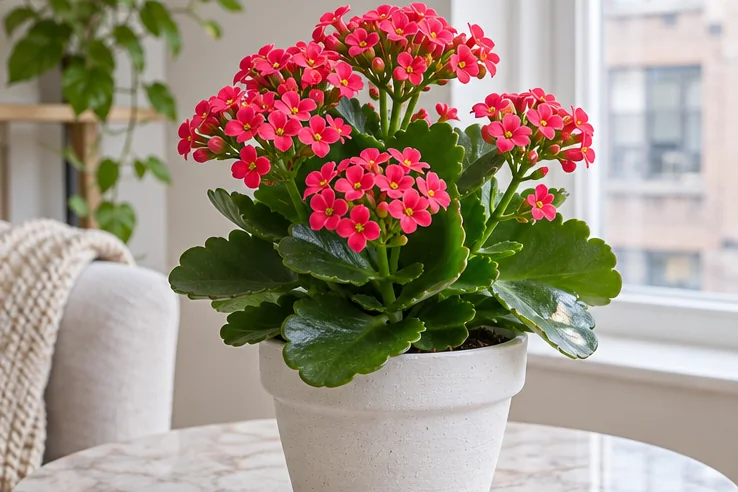
Give Flaming Katy bright light and let the potting medium dry between waterings. The thick leaves of Kalanchoe blossfeldiana store water. A draining pot and a moisture check before you water will help it stay in good shape after the flowers from the store fade.
This species forms buds in response to a period of long nights. If you want new flowers, keep the plant in suitable daytime light and protect the long dark period from interruptions. Start with a healthy plant. A soft stem or a pot that never dries needs attention before a flowering schedule will help.
Get the light and container right
Choose a bright spot where you can see the newest leaves. Move a plant from a dim sales display toward stronger daylight gradually. Check how the leaves look and how fast the mix dries after the change. A window that gives light in winter can expose the plant to stronger sun at another time of year.
Use a pot with functioning drainage holes and a relatively open mix suitable for a succulent. If the plant came wrapped in foil or in a decorative container, lift it out when you water and let the excess escape. Empty water from the cover before putting the plant back. A pot sitting inside a second one can hide persistent moisture.
Keep the plant at a manageable scale. Give the leaves room around other pots so you can examine them and remove spent material. If the roots are growing well and the current pot drains appropriately, a newly purchased plant can use the time to adjust before you consider repotting.
Check moisture away from the surface
Feel the mix below the top layer or lift the pot and compare its weight with how it felt after watering. Surface material can dry while the lower part stays damp. Once the mix has dried sufficiently, water thoroughly and let the pot drain. Make the next check when the plant and medium are likely to need it.
A cooler room or less winter light may slow drying. Change the watering interval accordingly. Soft foliage in a wet pot calls for a check for root or stem trouble. A dry mix with slightly limp leaves suggests a different situation. Feel the leaves and check the mix together before you decide whether to water.
Check where water reaches the drainage hole if the plant starts drying unevenly. Inspect how roots and mix fill the container. If old medium has compacted or the roots need attention, use the information to decide whether a change in the pot or mix will help.
Tidy up when flowers are spent
Individual flowers can fade at different times within a cluster. Once the cluster is finished, trim its stem with clean tools without cutting into healthy leaves. Rotate the plant as you work and check the base for yellowed or damaged material. Removing spent clusters lets you see whether new shoots are forming below them.
If the plant has developed long weak-looking stems, check the light it has received. Adjust exposure gradually and allow healthy new growth to develop. Keep enough leafy growth to support the plant while it recovers from the move or seasonal change.
Give a healthy plant long, uninterrupted nights
Flaming Katy is a short-day plant, which means a suitable pattern of short days and long nights helps induce flower buds. For this species, NC State Extension recommends 14 hours of uninterrupted darkness each night for at least six weeks in fall or winter. Set up a location with a dependable dark period and bright light during the day.
Consider the actual room schedule. A table where someone turns on a lamp late at night may interrupt darkness. A space that stays dark at night and offers usable daytime light is easier to manage consistently. If you move the plant as part of the routine, choose a spot and sequence you can keep up while you check water as usual.
Watch the shoot tips for bud development. Timing depends on the plant’s condition and conditions during the dark period. If no buds appear, review light at night, day brightness and plant health. Avoid trying to compensate with extra fertilizer or water before you have identified a care issue.
Keep the plant away from pets
Kalanchoes can be toxic to cats and dogs if eaten. Put the pot and dropped flowers where your animals cannot reach them. If you suspect ingestion, contact a veterinarian or an animal poison service for guidance. Keep the plant label and note the likely time of exposure.
For ordinary care, record when the first display ended, how quickly the pot dried and when healthy growth or buds appeared. That short record helps you repeat a setup that worked for your plant. Bright days, well-drained roots and an appropriate night pattern address three different parts of its growth cycle.