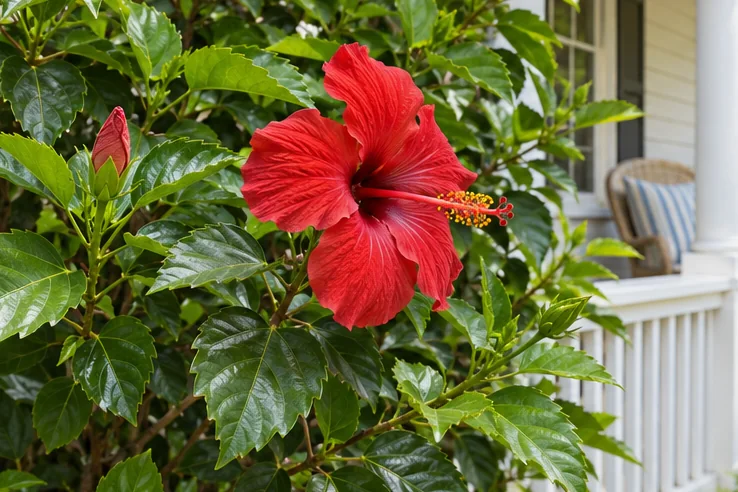
Tropical hibiscus, Hibiscus rosa-sinensis, grows best with strong light, a root zone that drains and enough water to support growth. Give it suitable warmth during its growing season. Where winters are cold, use a container you can move to protection and adjust watering as growth slows indoors.
This guide is for the tropical flowering shrub. Plants called hibiscus can also include hardy woody shrubs and hardy perennials that die back to the ground. Check the botanical label before following a winter plan. Familiar flower shapes can appear on several kinds of hibiscus.
Spring is the time to adjust exposure
As your plant starts making new leaves, look at the light it has received since winter. An indoor plant can need gradual acclimation before going outdoors into stronger sun. Begin in a protected position and increase exposure as the plant adjusts. Check the leaves nearest the strongest light and see whether the pot dries faster.
Wait for outdoor temperatures suitable for tropical hibiscus. A bright afternoon can be followed by an unsuitable night, especially early in the season. Compare the forecast with regional and species care guidance before moving the plant. Keep a sheltered location available in case conditions change suddenly.
Check the container while it is easy to move. If a sound root ball has filled the pot or the old medium no longer drains as expected, consider repotting in an appropriately sized container. Use a well-draining potting mix and leave room for water to reach the root area. An oversized container can stay wet beyond the active roots.
Summer growth can change the watering interval
In bright, warm conditions, a leafy rose hibiscus can use a substantial amount of water. Check the mix below the surface and water when it needs it, then allow the excess to drain. A sunny pot on paving may dry sooner than a container in cooler sheltered conditions. Feel the medium and use the weight of the pot when practical.
Check where water goes. If the container stands in a saucer after heavy rain, clear the collected water. If the mix dries unevenly, observe whether it is wetted through and whether the roots are crowded. A damp surface gives you limited information about the center.
Use an appropriate fertilizer during active growth, following the product and plant care guidance. Measure the application and track how often you use it. A plant with root trouble needs a different first response from a healthy actively growing shrub. If growth slows, inspect light, moisture and temperature before increasing food.
Allow room for the branches to spread. In a mixed container display, a nearby large shrub can shade one side as the season progresses. Check which part of the hibiscus makes the most new growth and where buds form. Choose a spot that gives the plant enough light and still leaves you room to inspect the leaves and reach the pot when watering.
Look for a pattern if buds drop
Write down what changed around the time buds began dropping. A move, a spell of hot weather, a cold night or a drying event can all affect a plant. Check whether the mix has stayed wet or become very dry. Look at the entire shrub to see whether the issue is concentrated on one side.
Inspect leaf undersides, shoot tips and flowers for pests. Tropical hibiscus can have problems with insects or mites. Sticky residue, fine stippling or a cluster of insects deserves a close photo and identification. Choose any control according to the confirmed problem and the setting where the plant is growing.
If you see healthy new shoots and a few lost buds after a move, stabilize the plant’s conditions and observe what happens on the next growth. If the leaves and roots show wider decline, review the root zone and recent care before going after flowering. Multiple changes at once make the cause harder to identify.
Fall care starts before cold arrives
Plan the move indoors if the plant cannot stay outside. Decide where the shrub will get sufficient light and whether you can reach it for watering. Inspect it for pests before you put it near other houseplants. Clean up loose debris and retain the plant label for future care.
The transition changes the plant’s light, airflow and drying rate. Check the mix while it adjusts. Water according to the new conditions and current growth, and reduce feeding when there is little new growth under the advice for your plant and product.
Winter growth depends on the indoor conditions
Give the plant the best suitable light you can provide and keep it away from severe drafts. Some leaves may change after the move. Follow what happens to new growth and make sure the root ball dries appropriately. Different indoor spaces can support different amounts of winter growth and flowering.
Keep brief notes on the outdoor move, bud timing and how the plant spent winter. Compare those notes when growth picks up. A seasonal routine makes it easier to choose when to move, water and feed the shrub in your own climate.