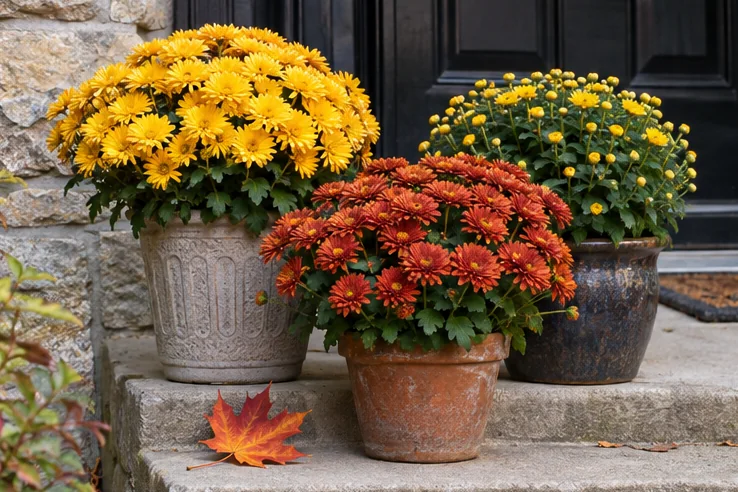
A pot of mums can provide color for several weeks. West Virginia University Extension describes roughly six to eight weeks with favorable care, although a mum bought in full bloom is already partway through its flowering period. Heat, heavy frost and a dry container can make the show shorter. Choose a plant with some open flowers and plenty of developed buds if you want to watch more of the color open at home.
Whether the plant returns next year is a separate question. It depends on the cultivar, planting time, establishment and winter conditions. Ask whether you are buying a garden mum appropriate for your area or a florist mum sold for a display.
Look closely at the stage of the flowers
At the store, check several sides of the plant. A mum with lots of fresh buds may show little color from across the aisle. Look at the buds up close and see whether some are just opening. You can confirm the color from the open flowers and get a sense of how much of the display is still ahead.
A fully open plant looks full immediately and can be practical for an event this week. If you want color to develop over the following weeks, choose a plant with more unopened buds. Brown petals or many dry flower heads show that some blooms have already aged. Check whether the older flowers are isolated or spread across the whole plant.
Check the foliage and medium too. A plant can have many unopened buds and still be stressed. Look for good leaf condition and an evenly watered, draining root ball. If the pot is tiny compared with the plant, plan to check it often in warm conditions.
Keep a potted display from drying out or sitting in water
Place newly purchased mums where they get useful light and where you can check the pot easily. Ask what light conditions the plant was grown or displayed in. A change to a hot patio can increase the rate of drying, especially when the whole plant is covered with foliage and flowers.
Feel the medium beneath the surface and lift the pot if practical. Water as needed and allow it to drain. A foil sleeve or outer container can collect excess water out of sight. Remove it or empty it after watering. In warm wind, check the pot sooner than you would in cool sheltered weather.
If hard frost is expected, protect a portable display according to what the cultivar and plant can tolerate. Temperatures around the pot can differ from the local forecast, particularly in an exposed position. A sheltered site can help you keep the flowers in view for longer when weather changes quickly.
Remove spent flowers if you prefer a tidier look. This helps you see which buds are still opening. It also helps you assess when the main display is finished. The pace depends on the plant and conditions, so check again after several days to see how much fresh color remains.
Read the season of a mum in the ground
Garden mums may be categorized by early, midseason and late blooming. Use those labels as a guide to the order of display in your climate. A late cultivar can be valuable in a long autumn and have less time to open where a hard freeze arrives early. Ask a regional nursery which cultivars reliably open for your season.
If planning several mums, compare their usual timing as well as their colors. Choosing plants with different bloom periods can spread the garden display across more weeks. Keep the labels or make a simple plan showing the cultivar at each position. You can use a season’s worth of observations to decide what to add the following year.
Decide whether you want it to return
A garden mum selected for regional hardiness and planted early enough to establish has a better chance of returning than a florist mum bought for temporary color. The University of Minnesota describes hardy mums chosen for its winters. That regional guidance illustrates why the exact plant matters. Garden mum labels still cover cultivars with varying cold tolerance.
Planting late in fall gives roots less time to establish before winter. If you are buying primarily for a perennial bed, plan ahead for a suitable planting time. Choose a site and follow local winter care guidance. For a pot bought in flower at the end of the season, check its exact identity before counting on an outdoor return.
Ask whether next year’s growth is important to you. For a seasonal container, you can enjoy the current display based on the buds you see now. For a perennial planting, use the hardiness and establishment information to choose what to buy and when to plant.
Track your own bloom window
Write down the day you bought the mum, the stage of its buds and when you last had substantial fresh color. Include any freezing nights, dry periods or moves. That record will tell you more about the next similar purchase than an exact promise from a general care guide. It will also show whether the cultivar’s flowering period fits the time you want to see it.