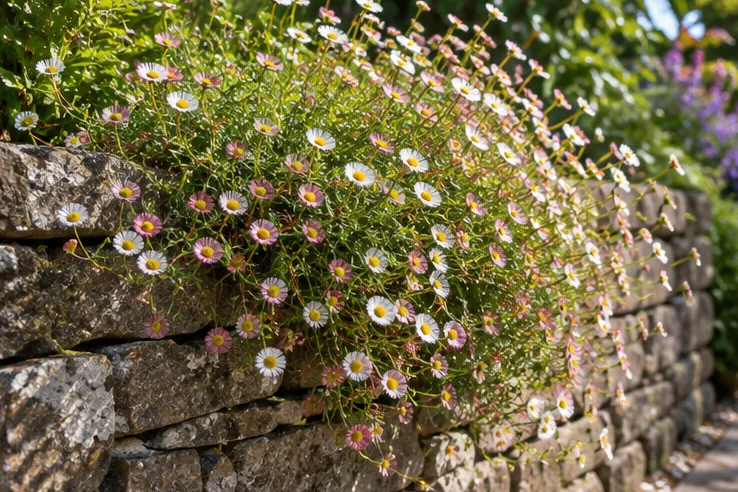
Mexican fleabane, Erigeron karvinskianus, is the trailing daisy often seen spilling over a stone wall. Give it bright light, a spot where water drains away and room for its stems to spread. The small flower heads may open white and age pink, so both colors can appear on one plant.
Use the full name when shopping. Erigeron is a genus with many species and growth habits. A plant sold as a fleabane could be an upright perennial for a border. For the soft cascade over a ledge, check that the label specifies E. karvinskianus and that it suits your site.
Find the right edge or pocket
Mexican fleabane is often used where a low plant can grow outward. A raised bed edge lets you see the stems and gives you easy access for trimming. A suitable container can give a similar effect if you can monitor drainage and water. If you want it to spill from a wall, first check that the wall can accommodate a planting pocket and that the stems have room beside any existing plants.
Watch the spot after rain. Water lingering around the planting surface is a reason to rethink the site. A low area that receives repeated runoff can stay wet even if the top looks dry between showers. Check the rest of the planting zone too, particularly when a small pocket sits above a heavy or compacted soil layer.
Consider which direction the stems can expand. Near a walkway, set the plant far enough back that you still have the width you need when it fills in. Where smaller plants grow below it, leave room to keep their leaves visible. An edge that seems empty at planting time may have a different look after the season’s growth.
Plant and water through establishment
Choose a sound nursery plant and match its root ball to the available space. Plant into a pocket large enough to hold the roots without sharply folding them. Set the base as directed for your planting and water to settle the soil. In a container, check that water can exit freely and steer the runoff somewhere suitable.
Check the original root ball in the first weeks. It can dry at a different rate from the soil around it. A smaller raised pocket may dry quickly in hot or windy weather. Let your watering depend on the actual moisture and the plant’s condition. A pot at the top of a wall usually needs different attention from a planting bed.
Once established, check how your plant responds to seasonal conditions. In an exposed garden, drying wind can increase the need to check water. In a cooler, wetter place, make sure the roots get air and the planting pocket can drain. The RHS guidance comes from UK conditions, so use advice for your region to interpret cold and wet periods.
Manage stems where you want the plant to spread
The loose stems are part of the look. When they interrupt access or hide another plant, remove the pieces that cross the edge first. A small trim can open a path without taking away the entire flower display. Check that the center of the plant still has healthy leafy growth after cutting.
Individual flower heads contain small flowers arranged together. Many can appear across the stems, so you may choose to tidy an entire section after a flush instead of removing each fading head. For a pot near a seat, it is easy to look over the plant occasionally and clip out damaged stems.
Mexican fleabane can self-seed in suitable conditions. New seedlings may emerge in cracks or disturbed spots away from the parent. Check local weed guidance before introducing it, especially near sensitive habitat. If it is unsuitable in your region, ask a local nursery or Extension office for a better local substitute with a similar habit. Where you choose to grow it, remove seedlings you do not want while they are small.
Distinguish site stress from a seasonal change
A plant that stops filling out may need a closer look at the root zone. Check for a dry original root ball or a wet pocket before watering. Look at stems inside the mound. Firm, leafy shoots can help you identify the best places to retain during a tidy-up.
If flowers are sparse, assess direct light and whether taller neighbors have shaded the plant. A position that received sun in spring can change as nearby plants grow. Compare the habit with the species on the label, since a different Erigeron may naturally flower or grow differently.
Use the first season to judge the fit
Photograph the planting from a common viewing angle after it starts flowering. Look again when its stems reach the edge or trail down the side of the container. Decide whether you have room to water, trim and clear seedlings. If those tasks stay simple, you have a spot where you can enjoy the white and pink display without constantly working around it.