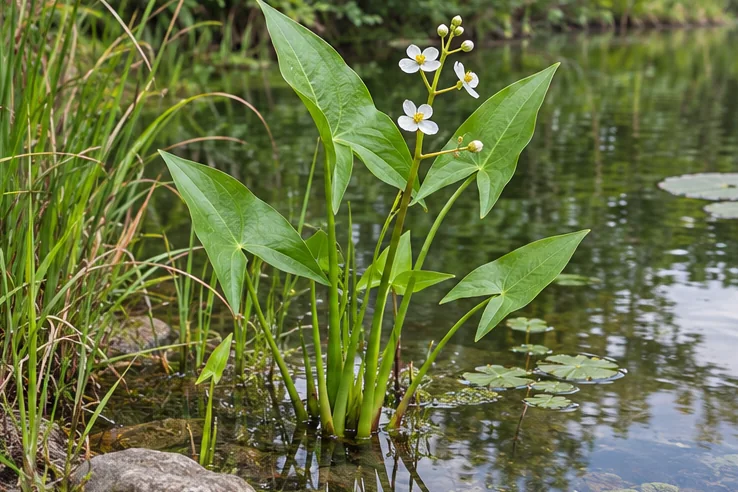
Grow the katniss plant in saturated soil or a suitable shallow-water planting basket at a pond’s edge. The plant often called katniss, broadleaf arrowhead or duck potato is Sagittaria latifolia. Its mature leaves can rise above the water in an arrowhead shape. Check the botanical name before choosing it, since the genus includes several species with similar common names.
Plan for spread before planting. Broadleaf arrowhead grows from underground structures and can form a patch. In a small ornamental pond, a basket gives you a place to inspect and manage the plant. Before introducing any aquatic plant to a natural waterway or a pond connected to one, check with a local authority or Extension office.
Recognize the plant at different water levels
An emerged leaf can show two rear lobes and a point extending forward. The leaf stalk attaches to a blade held above the water or mud. Leaf shape changes with growth conditions, and submerged growth can look narrower than the familiar arrowhead. Inspect several leaves if a recently purchased plant looks different from the picture on the tag.
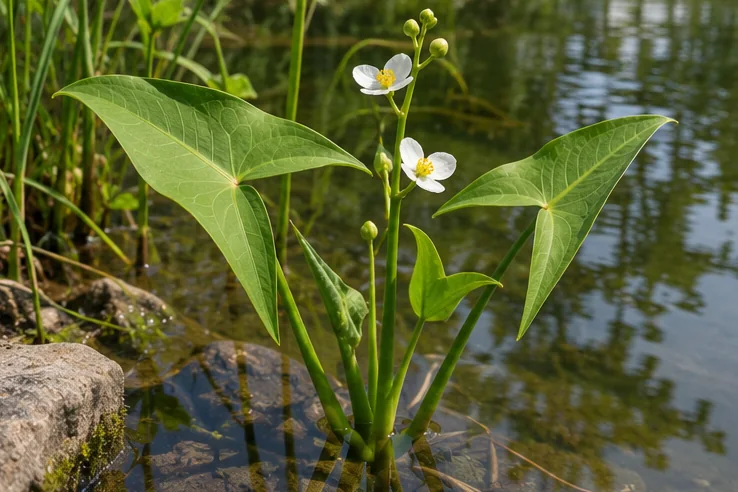
Flowers can appear on upright stalks above the foliage. A cluster of white flowers and the arrangement of the leaves can help confirm a nursery plant. Local wetland guides can help identify wild plants in place. Keep the label with your own planting so it is possible to verify the species if you have several kinds of arrowhead nearby.
The species produces tubers below the surface. That feature accounts for one of its common names and helps it endure and spread. Identification for planting tells you which conditions the plant can use. Leave wild plants in place and use correctly identified nursery stock for a garden pond.
Match the planting to the pond
Choose a location with good light and an appropriately wet root zone. Look at the pond edge at its usual water level and observe how water moves after rain. A ledge can be submerged one week and exposed another. Check the depth of your planned basket position against your plant supplier’s guidance and the species profile.
A pond with a shallow shelf can provide a spot where the root zone stays wet and the leaves can emerge. An area that dries for long periods may work differently from a continually saturated margin. If the pond is small, mark the space you can give the plant and decide how you will reach the basket for maintenance.
Use an aquatic planting container and medium suited to the installation. Set the nursery plant according to its growing instructions and lower it into a suitable position. Make sure the basket sits securely. Water levels and a gentle slope can affect where a light container settles, so check it after the first few days.
Watch for changes during the first season
Record where the crown sits in relation to the water and which leaves are above it. New leaves can look different once the plant settles into its new depth and light. A shrinking plant may need a closer look at whether the basket dried out, moved or ended up farther under water than you planned.
Use photographs to compare the size of the clump. If leaves begin crowding a smaller neighbor, adjust the position while you can still lift the basket. Reaching down around several overlapping plants is more difficult after their leaves and roots intermix.
Inspect surrounding mud and nearby containers for new shoots. Spread may come from tubers or other reproductive structures. A basket makes routine inspection easier but can still require you to manage growth around it. An annual review of the area is useful even if the first season looks orderly.
Plan seasonal care and disposal
The plant’s growth changes as local temperatures and day lengths shift. Check regional guidance for overwintering at your pond depth, especially where a small container pond freezes hard. Leave the plant in an appropriate position and keep its label visible after the foliage declines. Your local climate will help determine the right timing for dividing or moving it.
If a plant outgrows its space, lift and inspect the basket when conditions let you work safely around the water. Remove growth and loose plant material according to local disposal guidance. Keep unwanted plants out of streams, lakes and drainage channels, where they may be hard to retrieve or manage.
Check local rules and species guidance before planting near a natural or connected wetland. A plant with a broad native distribution may still need to be considered at the scale of the particular watershed. Ask a local Extension office or native plant nursery what belongs in your area.
Decide whether the location works
Compare water level, leaf growth and spread over a season. A good location lets you see the leaves and flowers and reach the planting without disturbing the rest of the pond. If you cannot inspect the roots or if the patch keeps reaching beyond the space allotted, adjust the location or choose another locally appropriate species for the smaller area.