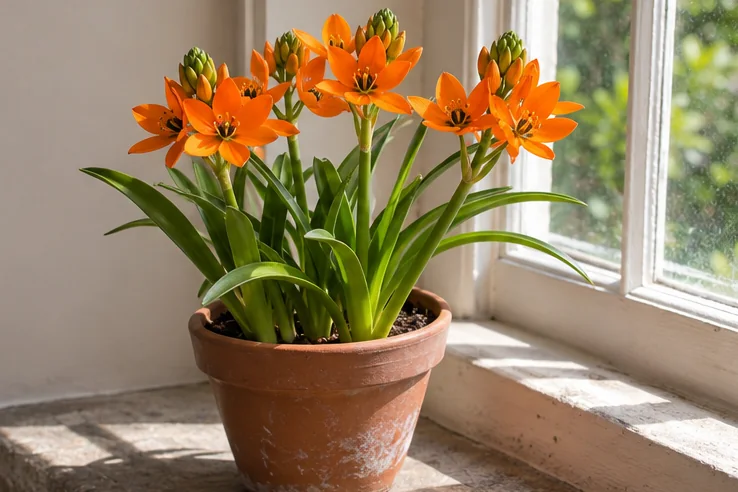
Give an orange star plant bright light and a pot that drains while the leaves are growing. When the flowers finish, keep looking at the green foliage. It can remain active after the last flower fades. Reduce watering as the leaves naturally decline and keep the medium much drier during dormancy.
Orange star usually refers to Ornithogalum dubium, a bulb from South Africa sold with clusters of orange flowers. Check the botanical name on the label. Other plants carry star-related common names, and different bulbs need different seasonal care.
Set up the pot while it is in flower
Put it where the flowers receive good light and the medium can drain after watering. If the pot is inside a decorative sleeve, check what happens to excess water. Remove accumulated water before returning the pot to its display position. Damp material pressed against drainage holes can also change how quickly it dries.
Watch for the strongest direct light if the plant came from a sheltered store. A bright position that changes gradually is easier to assess than an abrupt move to a hot window. Keep the stems where they have room and can be checked for wilting or the normal fading of individual flowers.
Feel the mix beneath the surface and assess the pot’s weight before watering. When the active plant needs water, let the excess drain freely. Check sooner if the room warms up or the pot gets more light. Pot size and the kind of mix affect drying, too. Several healthy leaves can continue growing through the flowering display, and their condition gives you a reason to keep checking moisture.
Keep the green leaves after the blooms fade
When the flower cluster is spent, remove the fading flower stalk if you prefer a tidy appearance. Keep the healthy leaves. They continue supporting the bulb during the leafy period. A pot that has finished flowering can stay in a bright place while those leaves remain active.
Check the foliage as weeks pass. Gradual yellowing associated with the end of the growth cycle calls for a change in watering. Sudden collapse in a pot that has remained wet calls for a different check. Inspect the container and the moisture deeper in the medium before assuming that every yellow leaf signals healthy dormancy.
Note when you stopped seeing fresh green growth. If plants in the same pot are at different stages, watch each clump. The condition of the leaves and the root area provides a better cue than the date on the calendar. Keep the pot where you can inspect it without repeatedly disturbing the bulbs.
Reduce water when the plant rests
As the leaves decline, extend the time between waterings and let the medium dry further. Once dormancy is clear, the bulb needs a much drier period than it did during active growth. Follow the guidance for the identified species and the particular pot conditions.
Keep the resting bulb where it is protected from unsuitable cold and excess moisture. You can mark the date the last foliage dried and label the pot so it stays identifiable later. If a container that looks empty attracts routine watering from someone else, move it to a designated dry spot.
Watch for new shoots. On seeing growth, move the pot back into good light if needed and begin adjusting water to the growth and medium. Start with checks rather than immediately keeping it continuously wet. Once the green foliage develops, resume the active-growing approach. A bulb’s ability to flower again depends on its condition and environment.
Decide whether it belongs outside
Check your climate before leaving the plant outdoors permanently. The RHS describes the species in the context of protection and suitable drainage. Local growing conditions determine whether it can be kept out through cooler or wet periods. A container lets you protect the bulb when the garden soil or winter temperatures are a poor fit.
If you place an actively growing pot outside seasonally, introduce stronger light gradually and check rainfall. An outdoor container can get more water than you planned during a wet spell. Look at the drain holes and remove any tray that leaves the pot standing in water. Move it if weather brings conditions it cannot tolerate.
Choose a display spot with people and pets in mind
The Royal Horticultural Society lists O. dubium as harmful if eaten and toxic to several pets, including cats and dogs. Wear gloves when handling the plant and put the bulbs and cut material out of reach of children and pets. If someone may have swallowed it, contact Poison Control. For a pet, contact a veterinarian or animal poison service. Keep the plant label or a photo available. The nickname orange star gives them less information than the botanical name.
Keep a simple record from purchase through the end of the first cycle. Write down when flowers faded, when leaves began declining and when fresh shoots appeared. Those observations will help you adjust care to this bulb’s stage the next time. The key changes in watering follow what you can see and feel in the pot, from active growth to a dry rest and back again.