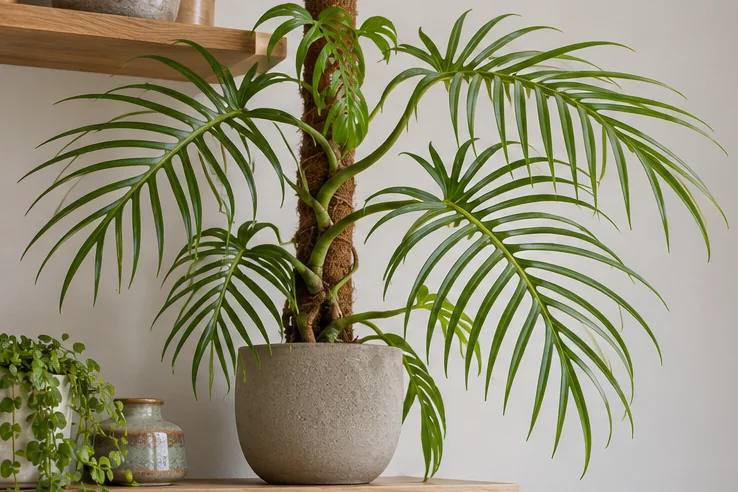
Give Philodendron tortum bright filtered light, an airy medium and a pot that drains. Leave space around the shoot tips. The deeply divided leaves can look delicate when they emerge, and a new leaf needs room to open without being caught in other plants or pressed against a window.
Use the botanical name when comparing care advice. While the foliage may recall a palm or another deeply divided philodendron, Kew recognizes P. tortum as a species. Older and alternate labels can appear in trade. A clear label and a photo of a mature leaf will help you match your plant to a reliable profile.
Position it for filtered light
Choose a bright part of the room where strong sun is filtered. Observe when light actually strikes the leaves. A place that stays cool and bright in spring can become exposed to a hotter beam later as the sun’s path shifts. Move an established plant toward brighter conditions gradually and observe the new leaves.
Keep the plant away from abrupt changes in temperature. An active air vent or cold glass can affect one side of the plant while the room still feels comfortable. Give enough space around the plant to turn the pot or look at leaf undersides without catching the leaf segments.
If a new shoot stretches toward the window, note which side gets the light and how far it has grown between leaves. Check the placement with the pot and any support in their usual positions. A support that casts shade over the active shoot could change how much light reaches it.
Make room for the way the stem grows
As the stem extends, decide whether a suitable support would help keep the growth upright. Choose a stable stake or other support that can be placed without crushing the roots. Secure only where appropriate, leaving room for the stem to grow and for leaves to move as they expand.
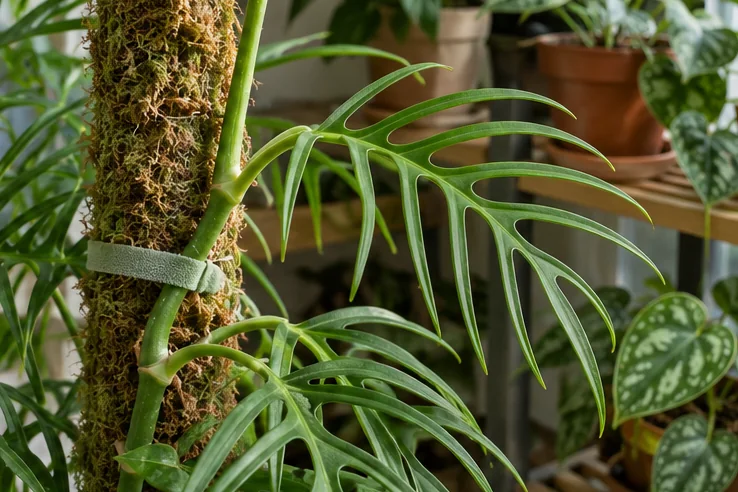
A small plant may need little support at first. Watch where the stem sits by itself and how its weight changes after new leaves open. If it begins to lean or tip the pot, plan a more stable setup before the stem becomes hard to work around.
Leave the emerging leaf alone while it unfolds. Its narrow segments can catch on each other or nearby objects. Keep competing plants and hanging attachments clear. If you repeatedly see misshapen new leaves, review room conditions, any recent changes and whether the plant has enough space.
Check below the surface before watering
Use a pot with drainage holes and a mix that holds some moisture while leaving air around the roots. Check deeper than the surface with particular care if the container is tall. When watering is needed, provide water to the root area and let the excess drain away before returning the pot to a closed display cover.
If the mix dries quickly, assess the light and warmth, the root volume and the structure of the medium. If it stays wet for a long time, check drainage, pot size and how much active growth the plant is making. Fewer active roots and cooler conditions can both slow drying.
Choose a container that matches the viable roots when you repot. An oversized pot can hold wet medium beyond the area the roots occupy. Keep track of the first few drying cycles after moving into a new mix so you can change the watering interval as needed.
Inspect growth before trying to solve a problem
An occasional worn leaf can have a different meaning from a series of new leaves that fail to open properly. Compare older and newer foliage. Look for insect activity, sticky spots or fine webbing and check the substrate before assuming the plant needs extra water, humidity or fertilizer.
If damage appears mainly on the side nearest the window, review that exposure. If it occurs around a new tie or plant support, look at whether the stem or emerging leaf touches it. If signs are widespread, inspect the root area and consider recent changes in more than one condition. Record what you found before making adjustments.
Keep the plant where it cannot be chewed
Royal Horticultural Society guidance for philodendrons treats ingestion as harmful. ASPCA information for related philodendrons identifies insoluble calcium oxalates as a concern if chewed. Put P. tortum where children and pets cannot reach the plant or fallen pieces. If someone or a pet may have eaten it, keep the label and contact the appropriate medical or veterinary resource for advice.
After you settle on a location, photograph the new leaves with the stem and support visible. The pictures make it easier to see what changed as the plant grew. A setup that lets you inspect the roots, monitor the drying cycle and give new leaves room to open will make the ongoing care simpler.