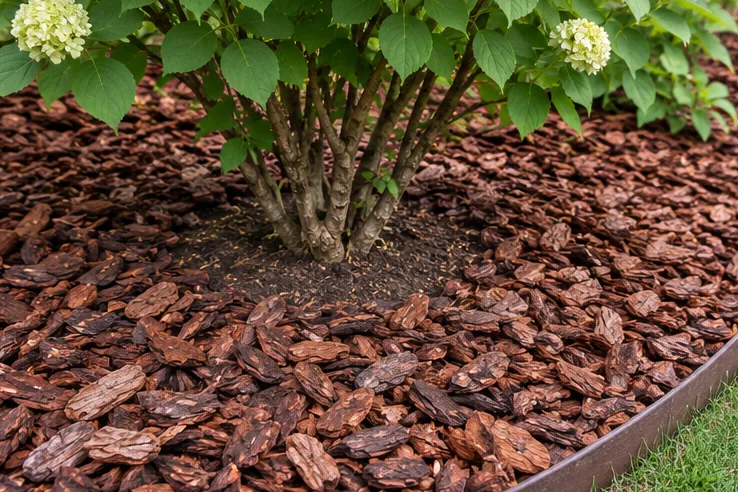
Choose pine bark mulch by particle size and how the bed handles water. Smaller bark pieces settle together more closely and can make it easier to work around small plants. Chunky nuggets make a visibly coarser surface and may shift in runoff. Compare a sample with the bed before ordering enough to cover an area.
Pine bark can cover exposed soil around established plants, help reduce evaporation and suppress some emerging weeds. It needs a suitable depth and a little room around stems and trunks. Its performance depends on the grade, the site and how you maintain it.
Compare fines, shredded bark and nuggets
Suppliers sell bark in several forms. A fine or screened grade has small pieces and can settle into an even-looking surface. Shredded bark can have elongated pieces and a more irregular texture. Nuggets show individual chunks and may stay visibly coarse across a bed. Inspect the material because grade names can vary by seller.
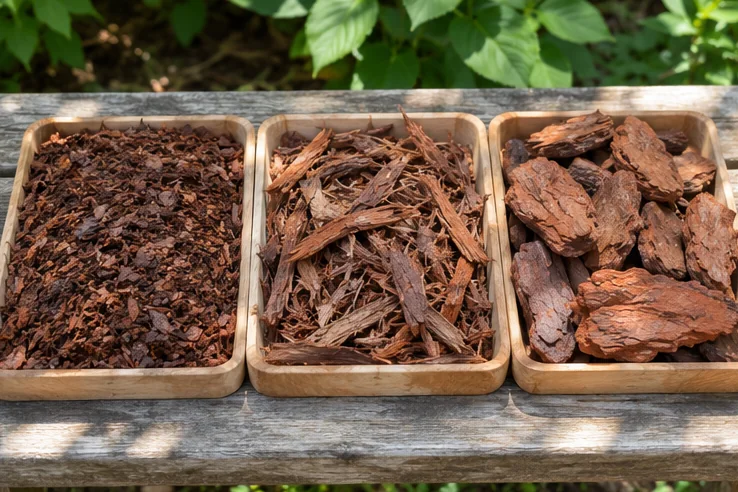
Fine material can pack more closely over time. Take that into account if you are putting it around small crowns or developing plants. A very coarse layer has larger spaces between pieces. Choose a size that fits the amount of surface cover you want and how easily you can work and weed the bed.
Ask the supplier what the product contains and what the stated age or processing means. Bag labels may describe bark alone or a mix of materials. If you want a consistent appearance across multiple beds, compare a handful from the actual batch. The product can look darker when wet and lighter when the surface has dried.
Match the grade to the way water moves
Look at the bed after rain. Note where water enters, how fast it moves and whether it pools around plants. Large bark pieces can float or gather against an edge in some conditions. A bed that receives a concentrated rush from paving may need the runoff issue addressed before any loose surface material will stay in place.
Near a front walk, check where pieces can scatter. A low border may help define the edge, while runoff can still carry lighter pieces over it. Set out a small test patch if the area has a visible slope. Observe what remains after a storm and whether you can clean the nearby hard surface easily.
Around a small perennial, choose a grade that lets you see the crown, where leaves and stems emerge. A pile of large nuggets can hide a young plant. In a broad bed of established shrubs, a coarse surface may be easier to maintain. Think about how often you need to move mulch aside to plant or divide something.
Apply enough to cover soil and keep plant bases clear
Depth guidance depends on particle size and site. Extension resources describe adjusting the layer so it covers soil without leaving a deep, poorly aerated buildup. Clear or identify old mulch before topping up. Measure the actual depth in more than one place. Part the faded bark with your fingers and check how deep it goes before you add a fresh layer.
Spread mulch across exposed soil and leave clearance around trunks and plant crowns. A deep mound against a tree trunk can keep the bark damp and hide damage near the base. Pull the material back so the trunk flare is visible. Check whether soil or old mulch has already built up against it before adding more.
Remove established weeds according to the plants present before spreading a layer. Mulch can suppress some seedlings by reducing light at the soil surface. Existing perennial weeds may persist. Check breaks along bed edges and around irrigation covers, where shoots can find openings.
Use the bark as surface cover
Pine bark placed on the soil surface decomposes over time and the layer settles. Adding more every year on a fixed schedule can gradually create excess depth. Check where you still have adequate cover, then replace only what the area needs. Pull any pieces back if they have accumulated against a stem.
If you want to change soil acidity, get a soil test and follow a recommendation for the plant and site. The acidity associated with a bark product does not establish that a surface layer will reliably shift soil pH. Mixing large amounts of woody material into soil is a separate decision that can affect how that soil behaves.
Use an appropriately formulated medium for a container or specific growing use. Pine bark sold as landscape mulch differs in grade and purpose from an ingredient selected for a potting mix. Confirm the product and its particle size before assuming they can be exchanged.
Recheck the bed after weather and maintenance
Look at the edges after rain and around plants after mulching or pruning. Note where bark has moved or settled. Move displaced material away from trunks and paths. Inspect the depth before each top-up. The grade that stays where it belongs, gives you access to your plants and covers the soil without burying stems is the suitable one for that bed.