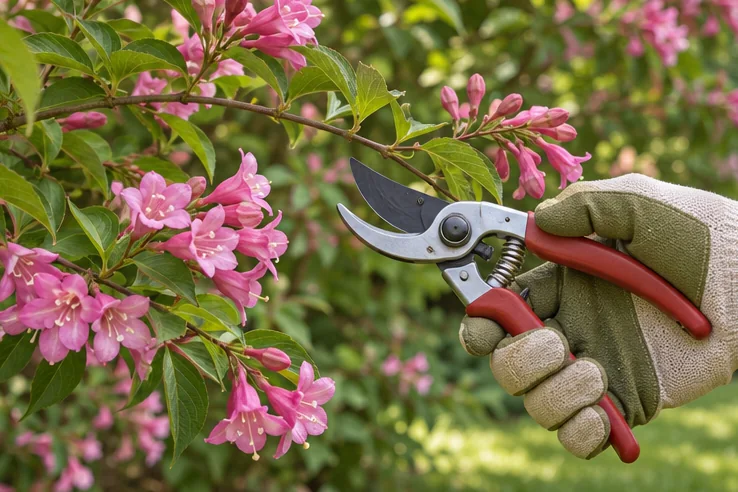
Prune a weigela for shape soon after its main spring flowering flush. Many of the first blooms appear on growth made the previous year. If you shorten that growth before it flowers, you can remove some of the display. After the flowers finish, make the specific cuts needed for structure or access before the shrub develops next year’s flowering growth.
The amount of work depends on what you want to accomplish. Clearing a few stems from a path is a different task from renewing an overgrown shrub. Identify the job first, then choose the timing and position of each cut.
Decide what should change
Step back and look at the shrub from the direction you normally see it. Weigela branches can arch. A stem that appears long from one side may contribute to the shape from another. Mark the branches actually blocking a path, rubbing against a neighbor or interfering with a door before cutting.
Look underneath the canopy as well. Check for dead or damaged stems and identify where they join sound growth. A branch with failed leaves after weather damage may deserve closer examination. Make decisions using the condition of the stem and the plant as a whole, since vigor can vary across an old shrub.
For light shaping, you may need only a few cuts. Follow each long shoot into the shrub and choose a point that will leave the remaining growth in a useful position. For a dense old plant, removing some older wood from near the base can help open the structure and make room for newer stems.
Time routine shaping after the main bloom
Watch the heaviest flush of flowers. Follow the flowering stems back to where they grew out from older branches. Once the main display ends, look at what else the shrub is doing. This is a useful time for routine thinning and selective shaping because you can see where last year’s growth carried blooms.
Some cultivars can flower again later. A repeat-blooming label still leaves the main spring display to consider. If you want to preserve as many blooms as possible, check which branches are flowering or developing healthy new growth and decide how much flower potential you are willing to remove. A small maintenance cut may be sufficient.
For dead, broken or hazardous material, the condition may determine the timing. Take on only the cuts you can make safely with the tools you have. If a large branch has been damaged, contact someone qualified to assess the plant and its surroundings.
Choose a thinning cut when you need to open the base
Identify several older stems and trace them down toward the base. Look for reasonable space around the younger branches you want to keep. Iowa State Extension describes removing some of the oldest stems as part of routine pruning. Use the structure in front of you to decide which ones create the most crowding or contribute the least useful growth.
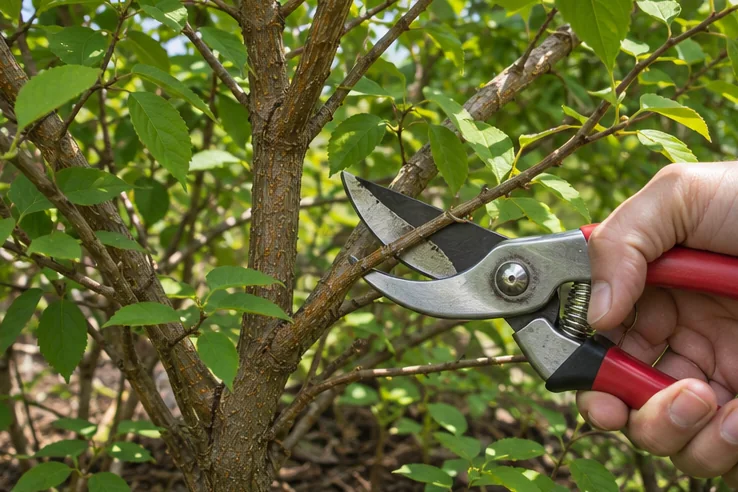
Use clean, suitable pruners or loppers for stems you can reach safely. Make the cut at the appropriate point near its origin without harming adjoining live tissue. Move the removed branch out and inspect the outline before choosing the next one. The first removed stem may reveal that another one can stay.
Shortening many branch tips gives a more even edge. It can also change the natural arching appearance and leave the interior crowded. When the problem is too many stems at the base, take the time to see the lower structure before committing to a row of surface cuts.
Renovate a large shrub in a way it can recover from
For a shrub that has been neglected for years, consider removing older stems in stages. Spread the change across seasons where the plant’s condition and your goals allow it. You can retain more of its existing form and assess how it responds. After a renewal cut, expect the shrub to look thinner and allow for a smaller flower display while it recovers.
A hard renovation may remove most of the existing flowering growth and change the display for a while. Consider the age, health and placement of the shrub before choosing this option. If it has poor drainage, insufficient light or an unsuitable space, a radical cut can leave those problems unresolved. A local nursery or Extension adviser can help assess a weak shrub before you attempt major work.
Review before removing one more branch
Set the tools down and look at the plant from all sides. Check the walking route, the branch that was rubbing and the overall shape. If you accomplished what you planned, let the plant grow. Record the pruning date and the first spring bloom date so you can see how the timing worked for your cultivar.
For an unlabeled weigela, a few observations through one spring and summer may tell you enough about its flowering pattern to plan the next light prune. Photograph the buds and stems where they form. The following year you can cut with a clearer picture of which branches carry the display.