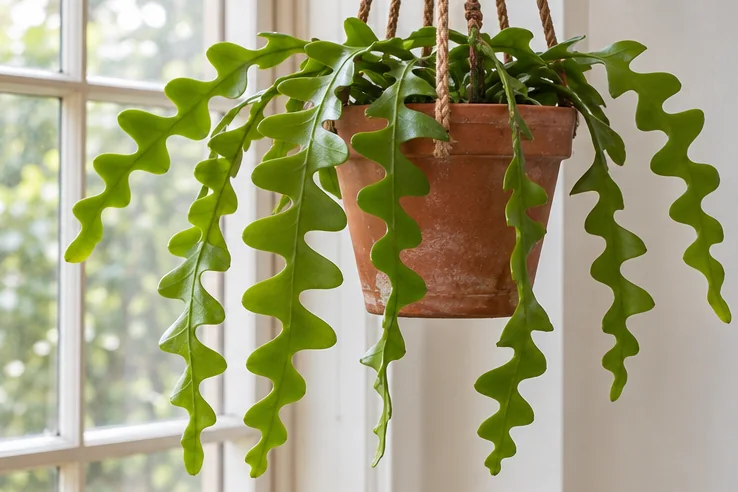
Give a ric rac cactus bright filtered light, an airy potting medium and water as the medium begins to dry during active growth. This forest cactus grows zigzag strips that hang over a container. Those zigzag strips are flattened stems. New segments grow from the base or from older stems and may take time to show the same zigzag edge.
The plant often called ric rac or fishbone cactus is Disocactus anguliger. Older references and plant tags may use Epiphyllum anguliger. Kew lists the older name as a synonym. Other plants can share those common names, so check the botanical label and compare its growth with a reliable profile.
Choose light that fits a forest cactus
Start near a window where bright light reaches the plant for part of the day without baking the stems. A light curtain or a position a little outside the strongest beam can help when the window is sunny. Give the pot enough room that stems can hang without lying against cold glass or being pinched behind furniture.
If you move the plant into brighter light, change exposure gradually and watch the older stems. Persistent pale or damaged patches on the most exposed side warrant a change in placement. Look at the position across seasons. A window that gives gentle morning light during one part of the year can expose the pot to longer stretches of direct light later.
Place the container where you can see the newest growth. A shelf near eye level or a suitable hanging container may be a good fit. Leave enough height below it for the stems to extend. A plant resting on a crowded surface can become harder to inspect where stems meet the medium.
Use a container that drains freely
The RHS recommends a well-drained medium for epiphytic cacti, the group that commonly grows on other plants in its natural habitat. In a pot, the medium needs to leave some air around the roots. Choose a suitable mix for forest cacti and a container with an opening for water to escape.
If the pot already fits and drains, leave it alone while the plant settles. Repot when the roots or the medium give you a reason, for example if old material has compacted and stays wet. Choose a size that suits the root system. Large amounts of extra medium can prolong wetness for a small plant.
Check the container after watering. Lift the inner pot out of a decorative cover if water collects there. Return it once the excess has drained. In a hanging planter, inspect the bottom and catch tray instead of relying on what the surface looks like.
Water according to growth and conditions
During active growth, check the mix regularly and water when it begins drying. Let it drain. A plant near a warm window can use or lose water more quickly than one in a cooler location. Check the weight of the pot and the moisture beneath the surface so you can notice that change.
In winter or during slower growth, check more carefully before watering. Cool conditions can slow drying. Keep the plant from sitting in water and adjust frequency to what the container actually needs. If stems look limp, check for a persistently wet root area as well as dryness. Soft discolored tissue merits a closer look at the roots and base.
A short watering record can be helpful after repotting. Note how many days it took the mix to begin drying in your conditions and make another check as the season changes. Use that record to decide when to check the pot again. Water once the mix has begun to dry.
Make another plant from a sound stem
Choose a firm, healthy part of a stem. Use a clean cutting tool and remember which end originally pointed toward the base. Follow an epiphytic cactus propagation guide for drying the cut surface and placing it in a suitable airy medium. Handle the strip gently so it stays intact.
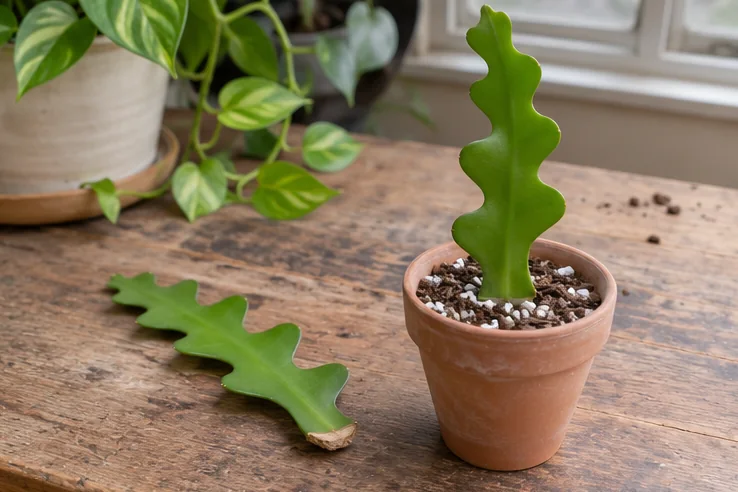
Keep the cutting in suitable light and check the medium without repeatedly unpotting it. A cutting with no roots has different water needs from a large established plant. When you see new growth or other reliable signs of rooting, gradually care for it as a young plant. Timing depends on conditions.
Watch for new growth and possible flowering
Mature plants can flower, though indoor conditions and the stage of the plant affect whether you see buds. Give it steady light and appropriate water through growth. If the plant produces healthy new stems, let it fill out without making repeated changes to force flowers. The zigzag growth is visible even when flowers are absent, and a consistent setup lets you see how your plant develops through the year.
If you have several zigzag cacti, keep each label with its pot so a cutting can be traced to the plant it came from.