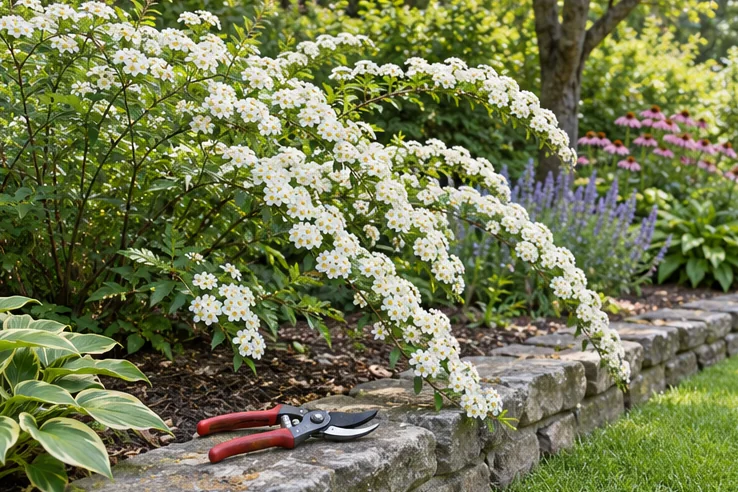
Prune a spring-flowering spirea after its main display if you want to keep that season’s blossoms. Many bridal-wreath forms flower on growth from the previous year. Summer-flowering Japanese spireas typically bloom on new growth, which lets you shape them before that growth begins. Find out when your shrub flowers and what you want to change before making a large cut.
A few branches can be removed for access or damage without treating every stem the same way. An old crowded shrub may need a different approach. Decide whether the job is tidying, thinning or renovation.
Identify the flowering habit first
Look for the nursery tag or purchase information. The name spirea covers several species and many selections with different growth. A spring-blooming shrub with pale flowers along arching branches may be a bridal-wreath type. Japanese spirea selections may have flower clusters toward the tips of new summer shoots. Use the whole plant and the flowering pattern when confirming the name.
If no one knows which plant you have, photograph it through one flowering cycle before doing a major prune. Note when buds become visible and which stems carry them. If you can see the flower-bearing shoots emerging from an older branch, include that in the picture. Report the dates and the appearance to a local nursery or Extension office if identification is uncertain.
Some plants with spirea in the common name belong to other groups. Confirm that you have a Spiraea species before applying a schedule. If the shrub is in sound condition and the job is cosmetic, waiting for the flowers can be the simplest way to preserve the current display and learn its timing.
Shape spring bloomers after flowers fade
Wait for the main display to finish. Identify what part of the shrub hangs too far into a path or grows against something. Trace each branch back into the shrub so you can shorten it without cutting neighboring stems that still have room to grow. On an arching form, retaining healthy long branches can preserve the familiar outline.
Look at the center while you work. If several older stems crowd younger ones, remove selected older stems where they originate when you can do it safely. Take the removed growth away and step back before cutting more. What seems dense from above may open up with only a few inches of extra room at the base.
A heading cut shortens a stem, and a thinning cut removes a branch at its origin. These operations can have different effects on the shrub’s look. Think about whether you need a shorter tip or more space inside the plant. Routine shearing can hide the natural shape of a loose spring-flowering form.
Shape summer bloomers before active growth where appropriate
For a summer-flowering Japanese spirea, late winter or early spring before new growth is a common window for routine shaping. Consider your local weather and the plant’s condition. Remove dead, damaged or rubbing material and decide how much height or spread you want to retain.
On a small shrub, start by removing stems that interfere with access, then check whether the remaining growth fits. If flowers are the priority, preserve healthy structure and give it room for fresh stems. Check the label or an established local care source for your particular selection.
If you remove spent flower clusters later, work on those clusters and preserve the rest of the healthy growth where practical. Flower removal and structural pruning can be separate jobs. Give the plant time to show its natural form after the main cut before deciding whether it needs a summer tidy-up.
Handle neglected shrubs in stages
If a shrub is much larger than expected or crowded with older stems, assess its health and position before renovating it. An older plant in heavy shade or wet soil may need attention to those conditions first. Look for sturdy young growth and safe access to the base.
Consider removing older stems in stages while retaining enough living structure for the shrub to remain presentable. Larger renewal cuts can remove flower buds on a spring bloomer and can leave a substantial gap. Decide whether that tradeoff is workable before you clear a large portion in one session.
Check for any truly broken or dead material while you make the plan. Use clean tools sized for the branches and seek qualified help if substantial woody growth is difficult to reach or cut safely. Aim for cuts that you can see and control rather than working blind inside a mass of branches.
Record the bloom and the cuts
Write down when the main flush ended, which stems you removed and how the plant looked after the work. Look again when the next shoots grow. If the shrub still fits the spot and the flower display meets your goal, repeat the light maintenance when the next appropriate window arrives. The record makes the shrub’s own cycle the guide for future decisions.