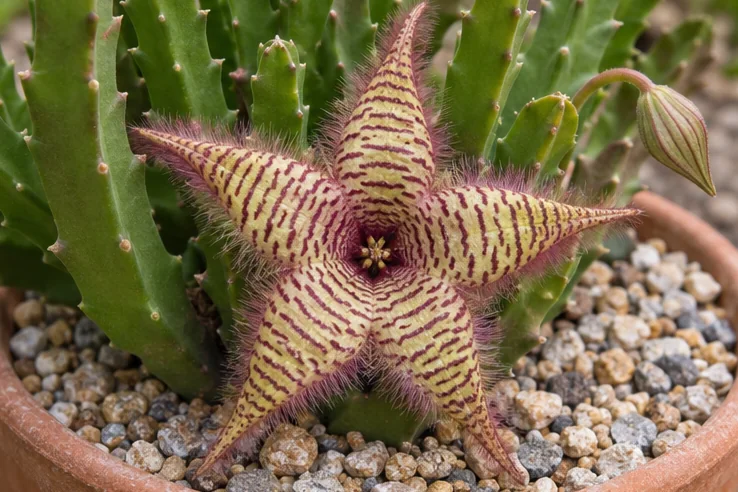
Give a Stapelia bright light, a fast-draining mix and a pot that lets excess water escape. During active growth, check how far the mix has dried before you water. In a cool, inactive period, check before watering and keep the root area from remaining wet.
The plant often called starfish cactus is a stem succulent. Species such as Stapelia gigantea and S. grandiflora can produce large star-shaped flowers. Their scent can resemble carrion and is associated with pollination by flies. A smell near an open flower deserves a different check from a smell coming from soft tissue at the base.
Find out which starfish plant you have
Compare the botanical name on the pot with the plant’s stems and flowers when available. The common name is applied to more than one species and sometimes to related plants. A healthy shoot typically has angled sides and can make more growth from the base. An open flower supplies more details for comparison.
SANBI describes the large, pale, lined blooms of S. gigantea, with a star shape and surface hairs. NC State Extension documents S. grandiflora and its large hairy blooms. Color and markings can vary, so use the whole flower, stem and label when you want a reliable identification.
Take two photos if the plant blooms. Include the whole pot in one so you can see where the flower formed, then take a closer shot of the center, lobes and hairs. Record when it opened and from which side of the plant it was most noticeable. That will help you choose a position for the next season.
Give the stems light and space
Put the plant in a bright location and adjust it gradually when moving to stronger sun. A pot on a sunny patio may heat up differently from one near a window. Observe the color and texture of exposed stems and the rate at which the mix dries. Compare the species profile before choosing a permanent exposure.
The stems can crowd the edge of a small pot as they expand. Leave room to look at them from several sides. When flowers open low down, a shelf or bench can make the display easier to see. Choose a stable place and protect the plant from frost or conditions outside the range it can tolerate.
In a home where flower scent may be an issue, plan where the plant can stand during a bloom. A suitable sheltered location can make the display easier to enjoy. Watch temperature and light if moving the plant, and keep the pot accessible for normal observation.
Pick a container and check the whole root zone
Use a freely draining medium suitable for stem succulents. Choose a pot with an open drainage hole and enough space for the roots and base. Select the pot for the plant you have now. An oversized container can hold wet mix well beyond the living roots.
Inspect beneath the surface before watering. During active growth, water when the mix has dried enough, then let the container drain. Cooler weather, dimmer light and slower growth can extend the interval. A decorative outer pot can hold excess water where it is hard to see, so check it after watering.
Use the weight of the container and what you can see near the pot edge. Keep a record if the change between growing and resting conditions is hard to predict. If a stem looks shriveled and the medium is wet, inspect the root area before giving it more water. A wet root problem needs a different response from a dry pot.
Distinguish the flower scent from a problem at the base
A starfish flower can smell strongest when it is open, and flies may visit it. Look directly at the flower to locate the likely source. The scent is part of the bloom’s interaction with pollinators.
Also examine the stem bases and medium. Soft dark stems or a pot that stays wet deserve attention regardless of whether a flower is nearby. Remove the plant from standing water and identify what happened around the roots. If there is sound growth left, a grower can help assess whether a fresh setup or propagation from firmly healthy material is appropriate.
Flowers can vary from season to season. Healthy stems, new growth and suitable light tell you how the plant is doing while you wait. For a plant that has remained in the same pot for a long time, check the medium and root room before changing several factors to encourage blooming.
Let the plant’s growth set the schedule
Record when new stems appear and when the first flower opens. Also note how quickly the mix dries in each season. Those observations give you practical watering and placement cues for your home. A sunny room might suit the plant in winter and require a little more shelter in summer. Keep checking the stems and pot rather than following a calendar meant for another climate.