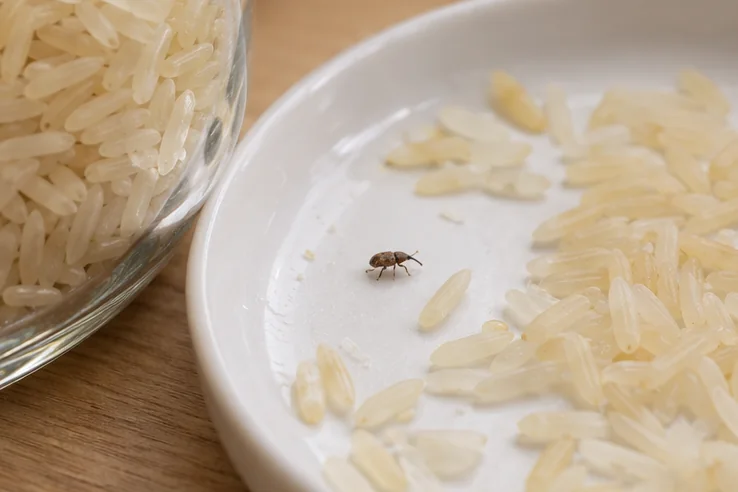
When you find a tiny brown bug indoors, note its precise location and how it moved. A beetle walking inside a bag of rice suggests a pantry inspection. A hairy larva under a rug points toward fibers or other material nearby. An oval insect from a mattress seam deserves a closer look at the bed and the surrounding furniture.
Brown color alone narrows the possibilities very little. Many household insects are brown at some life stage. Focus on shape, size, movement and the material the insect was on before choosing what to do.
In a pantry, inspect opened and unopened dry food
Rice weevils and related weevils have a noticeable snout that can show up with magnification. An adult may be found in a grain container or wandering on the shelf nearby. Look inside suspect bags and check shelf corners, especially if several insects have appeared in the same cabinet.
Flour beetles tend to look elongated and reddish brown. They can turn up around flour, cereal and other processed dry foods. Other pantry beetles have more rounded backs and can occur in spices, dried products or pet food. A close photo may let a local Extension office distinguish them.
Inspect each product individually and check the seams of containers. Finding a bug on the outside of a box tells you where it was walking. Finding multiple insects in one package is stronger evidence of a source. Separate suspect goods while you check them and discard confirmed infested food. A sealed container for sound dry goods makes it easier to tell where future activity starts.
Along carpet edges, examine the body and the fibers
Carpet beetle larvae often look hairy or bristly. You may find their shed skins in quiet areas by baseboards, under furniture or near wool and other materials they can feed on. Check stored fabric folds, the underside of a rug and places where pet hair or lint collects.
Adult carpet beetles are generally small and rounded. Some have colored scales that create a speckled pattern, while others look darker. They sometimes turn up at windows. When you find an adult, document it and check for larvae or damage before deciding where it came from.
The larva of a carpet beetle looks different from the adult. Save a clear view of the whole body if possible. A small hairy specimen and a smooth dark one from the same room may need to be identified separately before you can make sense of the pattern.
Around a bed, look for evidence in hiding places
An adult bed bug is broadly oval and relatively flat when unfed. Feeding can change its shape and color. Other insects can look similar at first glance. Search mattress seams, bed frame joints, the headboard and nearby furniture with a flashlight. U.S. EPA guidance lists live insects, eggs, shed skins and dark spotting among the signs worth documenting.
Itchy marks alone provide little help with insect identification. A bug seen running along a bed frame is a better candidate for a photo or sealed specimen. Include the place you found it and any other signs. In multiunit housing, a property manager or pest professional may need to coordinate an inspection.
In a damp corner or cabinet, watch for jumping or fast running
Springtails can appear in damp spots and may jump when disturbed. A tiny dark specimen near a wet sill or plant saucer gives you a reason to check moisture in the immediate area. Watch what it does when disturbed, then look for more specimens near that same damp spot before searching food or fabric.
Young cockroaches can be small, fast and flattened. A clear photograph of their body and any banding may help identify the kind. Brown-banded cockroaches can use drier indoor areas, so a dry location can still warrant confirmation. If you repeatedly see insects around a cabinet or appliance, record their positions and look for more than one specimen.
A brown insect at a window could have wandered inside after being outdoors. Check whether you see the same shape emerging from a particular gap or whether sightings are spread across the house. That simple distribution check can save time compared with inspecting every shelf and drawer at once.
Take a photograph someone can use
Set a ruler near the specimen if you can safely keep it still. Take one overhead image and one from the side. Insect features that help with identification include the body outline, length, hairs, wings and antennae. A bright background can make a dark specimen easier to see, and indirect light can reduce glare.
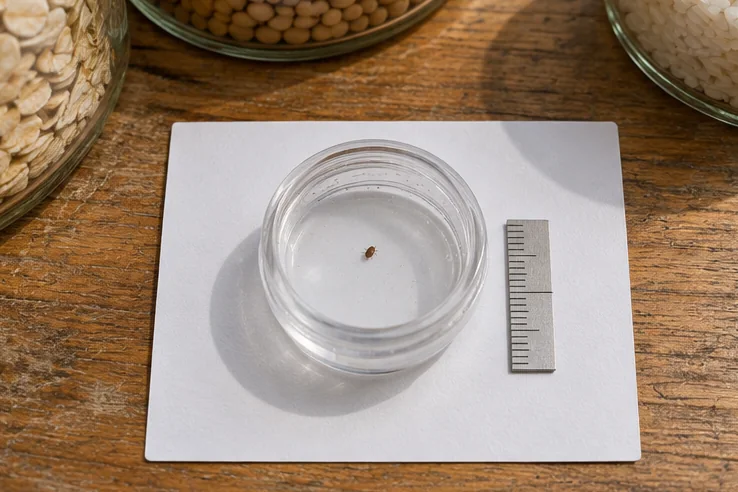
Record the date, room, exact surface and whether the insect flew, crawled or jumped. If a local Extension office accepts specimens, follow its instructions. For repeating activity, mark sightings on a simple sketch of the room. A clear cluster beside dry food, a damp window or a bed gives you an inspection area based on evidence before any control decision.