Watch the specks long enough to see if they move by themselves. Then check where you found them. A speck that jumps from a damp sill suggests one group of possibilities. Dusty specks on the underside of a plant leaf suggest another. Narrowing the location before you clean or spray helps preserve the clues you need to identify them.
This list includes insects, mites, eggs and waxy material. Some are visible only with magnification, and some resemble dust only when scattered or young. Start with the section that matches the place you found them.
Damp surfaces and stored food
1. Springtails
Pale springtails can look like tiny moving grains beside a wet sink edge, plant saucer or window. Watch for a jump when the surface is disturbed. Check for persistent moisture in the area and record whether the activity increases after watering or rain.
2. Booklice
These small, pale or grayish insects often turn up around humid cupboards, paper or cardboard. Look for slow crawling and an insect outline under a magnifier. Their presence can point to high humidity or mold growth on nearby materials.
3. Mold mites
Mold-associated mites can look like a moving pale film when many gather around damp organic material. Inspect the surrounding surface for signs of moisture and mold. A close-up of the area and a magnified specimen are more useful than a distant photo of a white patch.
4. Grain mites
These tiny pale mites can occur in damp or deteriorating stored foods. Check the inside and folded edges of a suspect package for concentrated activity. Keep that package separate while you identify the problem, since a loose speck on a shelf may have another origin.
Leaves, stems and pots
5. Whiteflies
Adult whiteflies look like small white winged flecks. They often rise in a group when an infested leaf is disturbed. Turn over a leaf and check for adults and immature stages close to the veins.
6. Foliar mealybugs
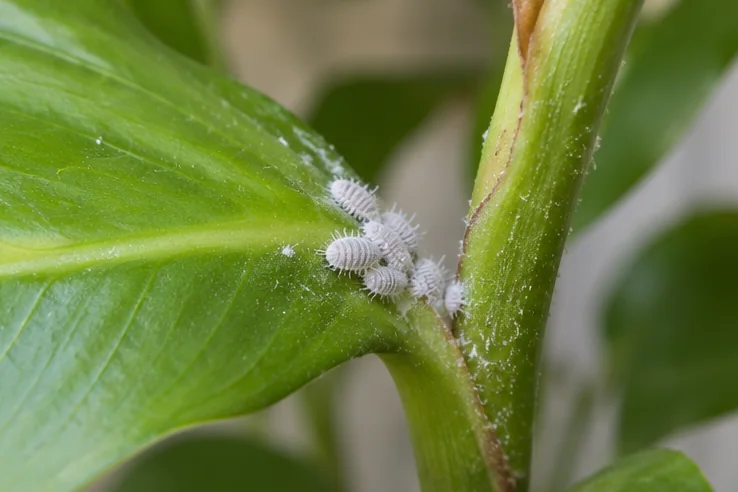
A white point on a leaf joint may be a mealybug under a waxy covering. Older colonies can look like flecks of cotton. Inspect stem nodes, leaf bases and protected creases where groups are easiest to miss.
7. Root mealybugs
These pests leave pale wax and small insects in the root area. Look for a concentration near the edge of the root ball or on the inside of the pot if there is reason to inspect the roots. Pale particles scattered evenly through the soil may simply be part of the potting mix.
8. Pale spider mites
A magnifier may reveal moving dots on the underside of a leaf. Fine webbing and light stippling, tiny discolored marks on the leaf, can support the identification. Different species and stages vary in color.
9. Thrips nymphs
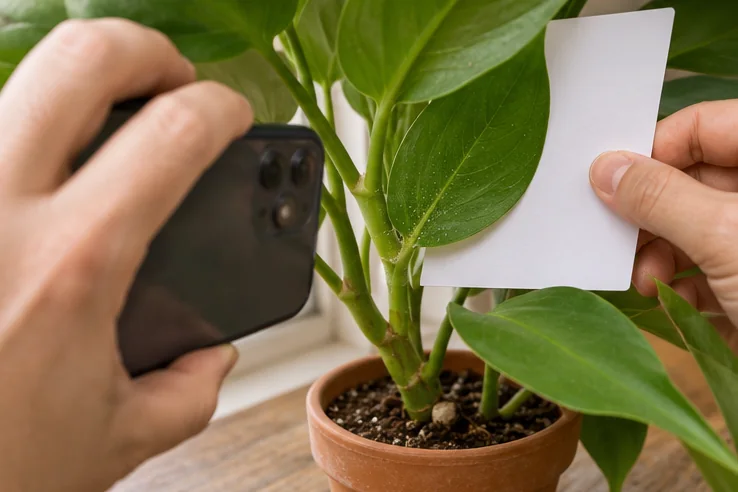
Pale young thrips can be hard to see against leaves or petals. Look for a slender body under magnification and inspect nearby leaves for scarring. Tap a suspect leaf over a plain sheet to make moving specimens easier to spot.
10. Cottony scale and its egg sacs
Some scale insects produce pale wax or a cottony egg sac along a stem or leaf vein. The white material may stay in one place. Record which plant it is on and whether similar patches line the stems.
11. Woolly aphids
White, fuzzy colonies on branches or foliage can contain aphids covered in wax. Examine a whole shoot for a grouping pattern. A photo that includes the host plant gives an Extension specialist a clue beyond the color of each insect.
12. Fungus gnat larvae
The larvae can look pale or translucent in damp potting medium, often with a visible dark head under magnification. They are more plausible in a wet pot than on a dry bookcase. Small adult gnats around the pot are another reason to inspect the medium.
Textiles, bedding and pet areas
13. Flea eggs
Fresh flea eggs can resemble pale grains around pet resting areas. Eggs remain still. Look for additional evidence, such as adult fleas, and have a veterinarian help confirm a suspected pet problem.
14. Bed bug eggs
Bed bug eggs are small and pale, often in protected spots around sleeping areas. They may adhere to a surface. Check nearby seams and joints for live bugs or shed skins before drawing a conclusion from white dots.
15. Clothes moth larvae
Pale larvae may be visible in material they feed on, sometimes with silk or webbing. Look inside stored woolens or under a rug. A single clean-looking speck in an open room is a weak clue without signs on susceptible material.
Collect a useful sample
Photograph the specks in place, then get a close view against a plain background with a ruler for scale. If you can keep a specimen in a sealed container, label it with the date and exact location. Household dust mites are generally too small to see unaided, so a plainly visible speck merits a wider search. Check with your local Extension office for specimen instructions if the pictures and location still leave you unsure.
References
- UC Statewide IPM Program, Springtails
- Penn State Extension, Booklice
- Purdue Extension, Grain Mites
- Pacific Northwest Insect Management Handbook, Mites
- University of Minnesota Extension, Insects on Indoor Plants
- UC Statewide IPM Program, Ground Mealybugs
- University of Minnesota Extension, Fleas
- U.S. EPA, How to Find Bed Bugs
- University of Minnesota Extension, Webbing Clothes Moth
- American Lung Association, Dust Mites