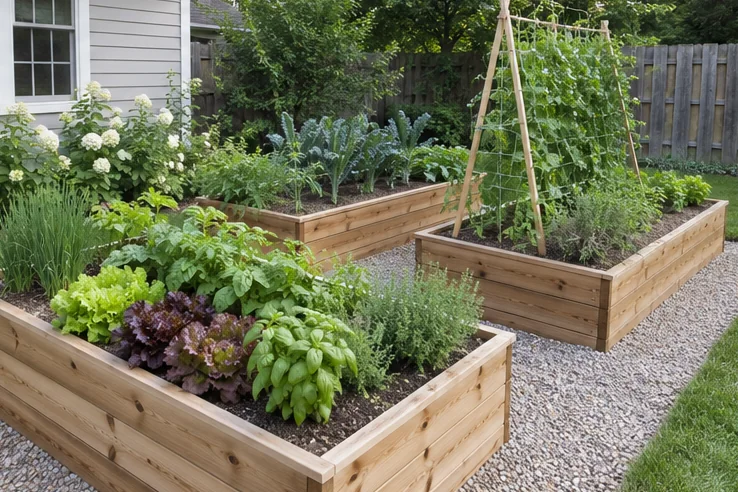
Before you draw a bed, check where direct sun falls, how you will bring water to the crops and how far you can reach without stepping on planted soil. Observe the site at several times of day. A spot that gets several hours of spring sun may spend much of summer in shade once the trees leaf out. Make a sketch with paths, walls, hose access and the tallest plants you want to grow.
These ideas are starting layouts. Adapt the crop spacing to the varieties you buy and the path width to the way you move through the garden.
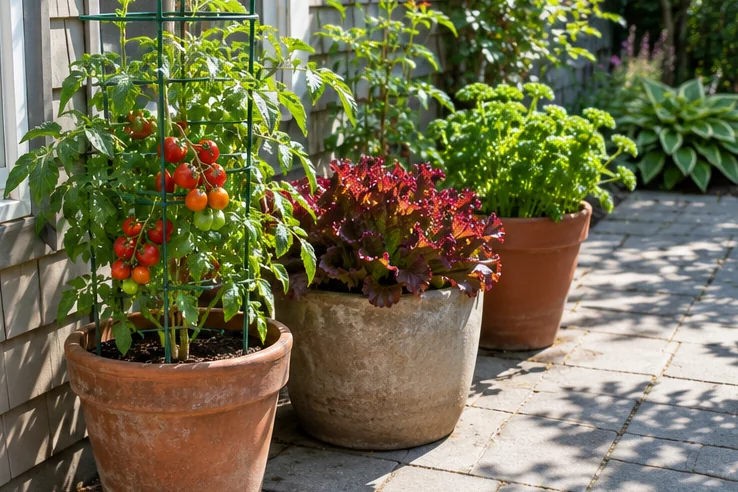
1. Group containers on a sunny patio
Put tall crops such as a compact tomato near the back and small pots of herbs or greens closer to you. Choose containers with drainage and keep the door and walking route clear. Pots can dry quickly in summer, so place them within easy reach of water.
2. Line grow bags along an accessible edge
Use individual bags for a row of peppers or compact tomatoes where building a bed makes little sense. Leave space between bags to water and inspect each plant. A filled bag is heavy, so decide where it will sit before filling it.
3. Plant one narrow bed along a wall
Make the bed narrow enough to reach from its open side. Put quick crops such as lettuce or radishes at the front and a row of herbs behind. Check reflected heat and shade, since a wall can create quite different growing conditions from an open yard.
4. Reach a raised bed from both sides
A rectangular bed with a path along each long side can hold beans, greens and carrots in short blocks. Mock up the width and try reaching the center before building it. Supports and mature foliage can reduce working room compared with a bare box.
5. Divide a plot with a cross path
Make four distinct beds around two intersecting paths. Use each bed for a manageable group of crops, such as greens, beans, roots or tomatoes. The paths take up some planting area, but they make it easy to reach the middle and record where crop families grew.
6. Put climbing crops on a fence-side trellis
Site a supported trellis where its shade will cause the fewest problems. Try pole beans or a climbing cucumber planted within reach from the path. Leave space to pick behind the vines if you have access, and check whether the structure is appropriate for the load.
7. Use a freestanding A-frame
Give two sides of an A-frame to climbing vegetables. Put a picking route along each side and consider how leaves shade the ground beneath. A cooler crop may fit nearby, but leave the frame accessible for repairs and end-of-season cleanup.
8. Wrap a bed around a U-shaped path
A U makes the center reachable from inside the planting area. Place frequently picked crops near the entrance so you do not need to brush through taller foliage. Check that the inner path stays usable when vines or leaves reach full size.
9. Cut a keyhole into a broad bed
Let a short path reach into the center of the bed, then plant the outside sections within arm’s reach of either the path or the outer edge. Group crops by height. Leave enough width to turn, especially if you carry a harvest basket.
10. Put shallow crops in a raised table planter
A purpose-built table planter can put leaf lettuce and some herbs within comfortable reach. Check that the planter depth suits the crops and that drainage has somewhere to go. A wet planter can weigh much more than the empty frame suggests.
11. Use a salad strip by the kitchen
Plant short sections of leaf lettuce and radishes where you can harvest them often. Leave a spare section for the next small sowing. A site beside the kitchen is convenient if it also provides suitable light and convenient water.
12. Plan a bed around succession planting
Draw a calendar beside the plan. Identify places where spring crops can finish in time for a follow-up planting suited to your remaining season. Reserve enough space for each crop before you sow, so a late first harvest does not force you to crowd the second.
13. Mix vegetables and herbs into a sunny border
Give upright vegetables an easy-to-reach spot behind low herbs. Group plants with similar water needs, and leave a route to places you need to harvest. A mixed border is harder to manage if you cannot reach a ripe vegetable without trampling the edging.
14. Separate spreading vines from compact crops
Give winter squash a defined zone where its vines can spread, and put short bush beans or greens in a separate strip. Leave a clear path between them. Keep an eye on vine direction while the tips are still small and easy to work around.
15. Adapt beds to a slope
On a gentle slope, sketch where water moves and where walking stays safe after rain. Put access first and keep planted soil stable. A site that needs substantial retaining walls or structural work warrants qualified local assessment before you commit to a terrace plan.