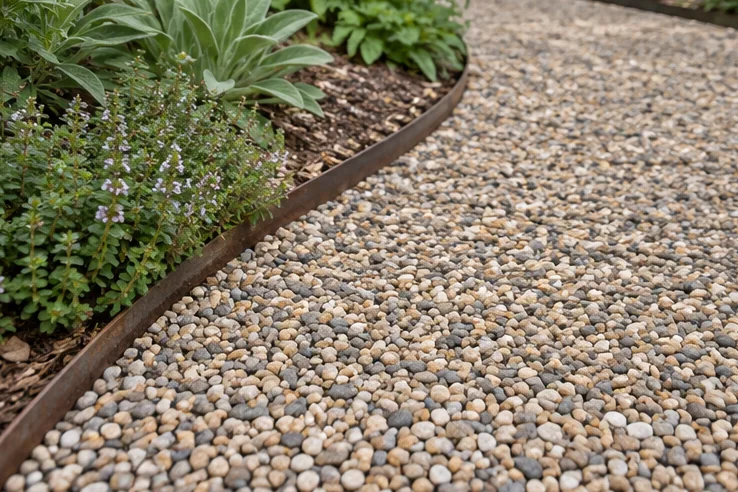
Pea gravel is small aggregate with rounded pieces. Suppliers commonly sell a size around three-eighths of an inch, but each blend can contain a range of stone sizes. Ask for the supplier’s size range and a sample. You want to know how the stones look and behave together after you spread them.
People use pea gravel for informal garden paths, some decorative landscape areas and selected drainage details. Rounded pieces can move under wheels or shoes. Whether a project drains or stays stable depends on the layers underneath, the slope, the edges and the way the surface will be used.
Compare size, washing and color
Grading describes how large and small the particles in the material are. Two local suppliers can both sell pea gravel while offering different blends. Ask whether a quoted measurement refers to a nominal size or the actual range of the stones. Examine the smallest pieces as well as the largest ones in a handful.
Washed material has been processed to remove some fine particles. Suppliers may offer unwashed material containing more dust and small particles from handling or screening. Check the product description if a design specifies washed aggregate. A bag’s color label alone tells you little about the amount of fines in it.
Colors depend on the source rock. A mixed blend can include cream, tan, brown and gray stones, with a darker look when wet. Put a sample against nearby paving in daylight and wet part of it to see how it changes. Match shipments where appearance across adjacent areas matters. The maker or quarry can tell you whether new stock comes from the same source.
Round stones feel different from angular gravel
Rounded pieces can roll or slide past each other. Angular crushed gravel has more edges that can help particles interlock. If you are choosing for a path that carries a cart, stroller or wheelbarrow, make a trial patch and walk or roll across it before ordering a full load.
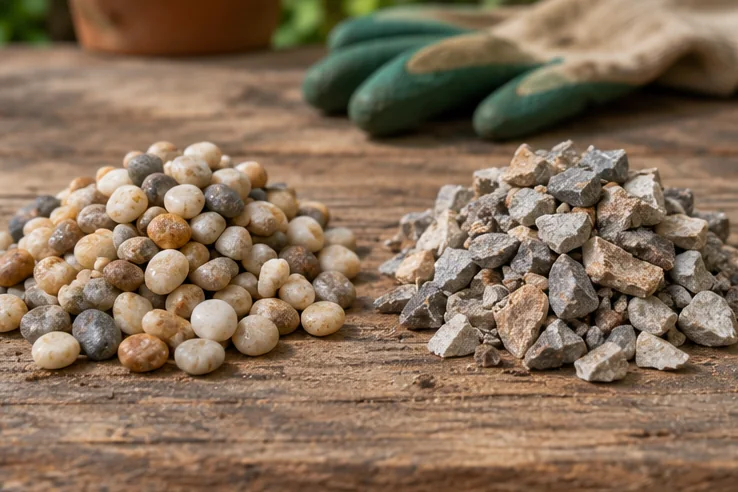
A deep loose layer can make a wheeled trip more difficult. For an informal path, consider how much migration you are willing to tidy and where the displaced gravel will go. At a threshold or lawn edge, escaping pebbles can collect in places you would rather keep clear.
For a route that needs reliable access for wheels, make surface firmness and stability part of the design from the outset. Compare a suitable compacted surface or paving with the loose round material. Have a qualified designer check applicable accessibility requirements when the project needs to meet them. The gravel name does not establish how the finished route will perform.
Choose uses according to the whole surface
In a quiet garden walking area, a round gravel path can give a soft-looking finish and let you see where it meets a planted edge. Plan how the path will be edged and supported. A bend with frequent foot traffic is worth testing because pebbles may shift most there.
In a sitting area, check chair legs and table feet on a sample patch. Small feet can sink or slide. If the furniture feels unstable, consider a firm surface below the furniture or select a different treatment for the whole area. Try the arrangements with the actual chairs if you already own them.
The stones can also work as a decorative cover in a place with little traffic. Think through leaf cleanup and plant maintenance first. Plants that send up lots of suckers, leaves that drop in quantity and areas that need frequent digging can make a stone surface harder to maintain.
Check drainage from top to bottom
Water can pass through spaces among clean gravel particles. Where it goes after that depends on the rest of the site. Dense or saturated soil under a gravel layer can still drain slowly. A path pitched toward a building can send water in an unwanted direction even if the surface material itself has gaps.
A drainage detail may specify particular washed aggregate, depth or adjoining filter materials. Match that specification. Rain gardens and other water management installations depend on soils, grades and an overflow path, so a material change can affect more than the appearance. Have the site assessed when grading or water near a foundation is involved.
To evaluate a low-stakes decorative area, look at it during or just after rain. Identify where runoff enters, where puddles remain and where soil or sediment might wash onto a fresh gravel layer. Those observations help you discuss the base and edges before buying the top layer.
Ask a supplier these questions before ordering
Bring the approximate dimensions and a description of the project. Ask for the product’s actual size range, whether it is washed and how much is available from one source. Check unit and delivery details. If you are estimating quantity, use the planned installed depth from your design and ask how the supplier’s units convert.
Try a small area first where you can observe the surface in use. Look at how it feels underfoot, whether it scatters through the edge and how easily you can sweep the adjoining area. That trial will tell you whether pea gravel belongs in the place you have in mind.