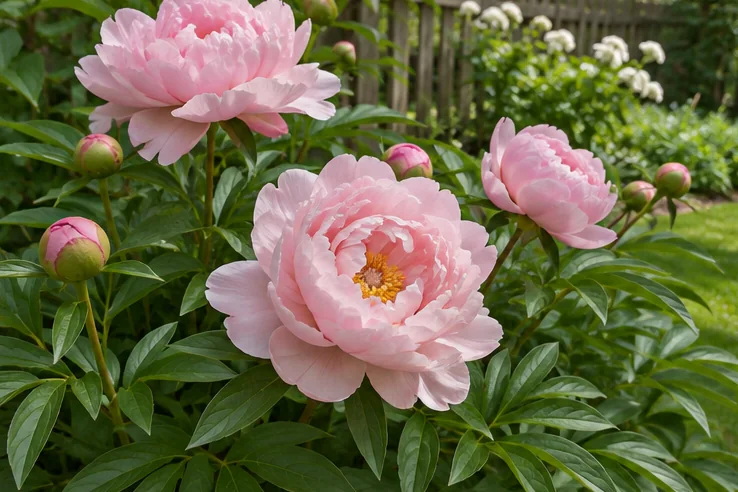
In many temperate U.S. gardens, peonies bloom from late spring into early summer. The best clue to the timing in your yard is the plant itself. Find the cultivar name on the plant tag, if you still have it. Then check for swelling buds and see how far along nearby peonies of the same type are. A cold spring can push the sequence later, even when a cultivar consistently flowers ahead of its neighbors.
Plant type also matters. Tree peonies retain a woody framework through winter. Herbaceous peonies send up new shoots from the ground after their foliage dies back. Intersectional, or Itoh, peonies are hybrids between tree and herbaceous types. Compare the timing of cultivars of the same kind before deciding that a plant is late.
Follow the buds from emergence to opening
Early in the season, look where each plant starts its new growth. On an herbaceous peony, new shoots rise from the crown, the area where roots and stems meet. A tree peony can leaf out from living wood that was already standing in winter. This is a good time to compare your plants with the same plants in last year’s pictures.
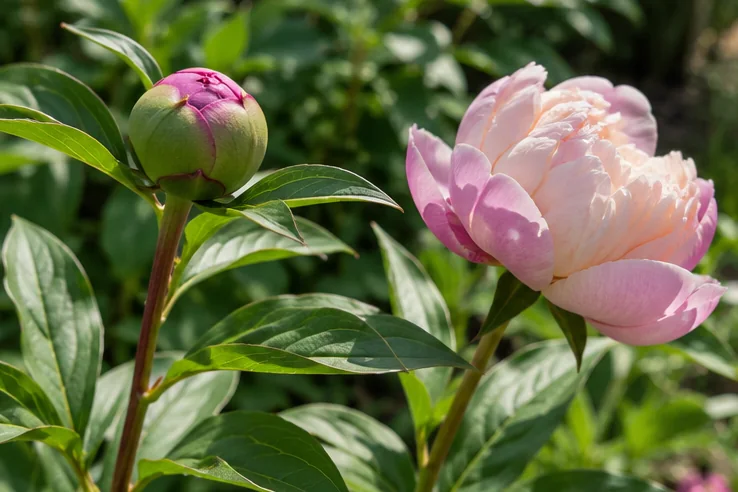
As the stems extend, look for flower buds. Early leaves can be conspicuous before a bud is easy to identify. Check again as the stem develops. Photograph the same plant from the same angle if you want a record. You can compare bud size and stem growth across visits without relying on memory.
An enlarging bud with color beginning to show is farther along than a tight green bud. Weather still affects how quickly it opens. Rain, wind and warmth can also change the length and appearance of the display after petals start opening. If you’re trying to catch the first flowers, take a quick look each day once the buds show color.
Make a sequence using your varieties
Nursery descriptions may call a cultivar early, midseason or late. Treat those terms as a sequence within the bloom season for the relevant plant type. Iowa State Extension puts the usual garden peony bloom in May or early June in Iowa. Different types and cultivars can extend that local window. The New York Botanical Garden also tracks tree peonies at its own location, where dates reflect that site and the weather.
Imagine three established peonies in the same sunny border. The first has opened flowers, the second has expanding buds and the third has small tight buds. Record the order and check again after the next warm spell. If the order repeats the following year, you have a useful local sequence. The date of the first open flower may shift while the order stays broadly similar.
For a new planting, write down the cultivar name and expected season before you discard the tag. If flower timing is the main reason you are adding a plant, verify which plants in your garden it will likely follow. The label and your previous bloom dates give you a better starting point than comparing flower color alone.
If there are stems and leaves but few buds
First consider how long the plant has been in place. A recently planted or divided peony can need time to establish before giving a strong display. Check that growth looks healthy and verify the plant type. A young plant that is producing good foliage has a different outlook from one that has weakened over several seasons.
Next, reassess light at the site during spring. A tree that has grown wider or a new planting nearby can change the amount of direct light the peony receives. Observe the site at several times of day rather than relying on how bright it looks in the morning.
For herbaceous peonies, planting too deep can reduce flowering. For bare-root herbaceous peonies in Iowa, the extension service recommends placing the buds, often called eyes, 1 to 2 inches below the soil surface. A change in grade or years of material accumulating over the crown can make the original depth difficult to judge. Confirm the kind of peony and follow regional planting guidance before deciding to lift it. Tree peonies call for different planting considerations.
If buds formed and then failed to open
A stem with small buds that never develop raises a different question from a stem without buds. Note whether the buds dried, became discolored or were physically damaged. Record any hard weather events and check nearby stems for a pattern. You can share those observations and photos with a local Extension office if damage is persistent.
Avoid making several changes at once. A useful garden note records whether the problem was no buds, damaged buds or flowers that opened and faded fast. Each observation points to a different place to look. Compare that record with the same cultivar the next season.
Keep the calendar simple
Write down four dates for each plant when you can. Record leaf emergence, visible buds, first open flower and the end of the main display. Add a brief note for unusual weather or a recent move. After a few seasons, the sequence will help you predict what is coming, plan replacements and recognize when an individual peony needs closer attention.