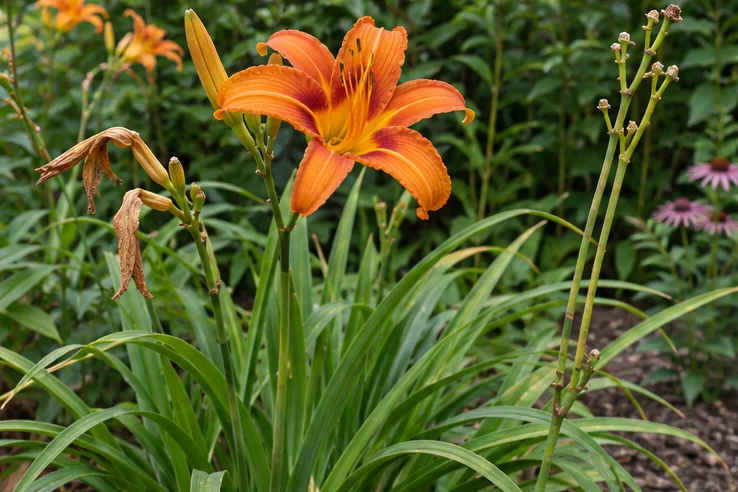
Remove a faded daylily flower whenever you want to tidy it, leaving any unopened buds on the stalk. Cut out a flower stalk after it has finished carrying flowers if you do not plan to keep seed. Leave healthy green leaves in place while they continue growing. Once foliage has died back, clean it up according to the cultivar, your climate and whether disease is present.
These three cuts serve different purposes. On one clump, you might see a spent flower up top, a new bud farther down and fully green leaves at the base. Look at what you are cutting before reaching for the shears.
Take off a spent flower without losing tomorrow’s buds
A daylily flower usually lasts about a day. A flowering stem can hold several buds that open in succession. Remove a wilted flower by working on that flower alone. Leave the neighboring buds and the section of stalk that supports them.
This tidying, often called deadheading, can help you see which flowers are still opening. It can also prevent seed development when you remove the relevant spent flower and its developing seed structure. Decide whether you want seed before removing every pod. Keeping seed involves a different goal from maintaining a display.
Check the clump at the time you normally see it. A flower that wilted yesterday and a firm bud about to open can be close together. If several stems are intertwined, take a moment to trace the one you want. There is little reason to remove more before the rest of the buds finish.
Cut the stalk after the last flower, unless you want seed
A daylily’s leafless flowering stalk is called a scape. Look up and down it to confirm whether any branches still have buds. When the last flower fades, remove the spent scape with clean tools. If you’re saving seed, leave that stalk until you’ve collected it. Work near the base while avoiding the leaves and crown.
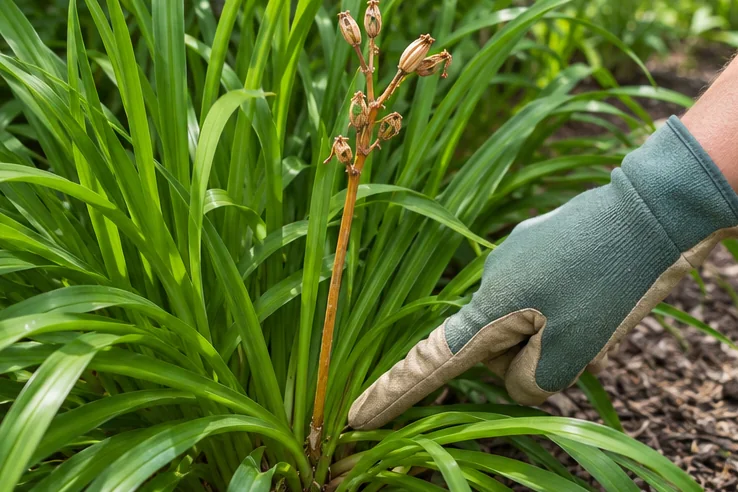
Some cultivars may send up another stalk later. Removing a used scape leaves room to see the newer one. Watch the base carefully if stems are close together. Cuts needed for appearance can be made a little at a time across the clump.
If you leave a seed pod, label the stalk and note where it is so it is not cut during routine cleanup. The rest of the finished scapes can still be tidied. This approach also makes it easier for someone else caring for the garden to know what to leave.
Keep healthy green leaves after flowering
The foliage can continue supporting the plant after the blooms are over. Leave green fans intact while they remain healthy. A missing flower stalk is a normal look for the clump later in the season. A full cut of the leaves for appearance removes foliage that is still working.
In a mixed border, you can tidy isolated damaged leaves or plan other plants to soften the look as the clump ages. Check whether leaves are simply older, or are showing a repeating pattern of spots, streaks or premature decline. Photograph a suspect leaf and the whole clump before deciding how to respond.
If you need to work around the clump, give yourself access instead of shearing the plants to make a temporary route. A border laid out with room for both foliage and maintenance can make the second half of the growing season easier.
Let the foliage habit and weather guide cleanup
Daylily cultivars can be dormant, semi-evergreen or evergreen in habit. The way they look in winter also depends on local conditions. Dormant foliage may die back after the season ends, while some foliage can persist elsewhere. Decide when to clean up by checking the plant rather than imposing the same fall date on every type.
After leaves die, remove dead material where you can do so without damaging the growing points. If green growth remains, assess which leaves have finished and tidy those first. In colder conditions the work may happen after natural dieback. In other locations a later cleanup may make more sense.
Disease can change the timing. Clemson Extension describes several daylily leaf problems and the role of sanitation in managing some of them. If symptoms are spreading, confirm what you are seeing and follow guidance for that problem. Use clean tools and decide how to dispose of affected material according to local advice.
Make one pass for each purpose
On a flowering clump, remove only the faded flowers you want to tidy. After flowering, identify finished scapes and take care of any seed decision. At the end of the leafy season, check which foliage has died or needs attention. Keeping those jobs separate helps preserve new flowers and working leaves while letting you clear material that has finished its part.