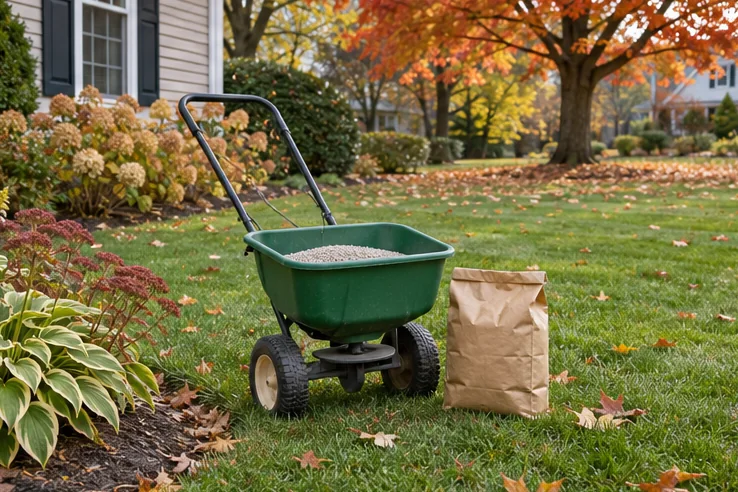
Check which grass you grow before you buy a product labeled winterizer. A fall lawn feeding can be part of a regional program for actively growing cool-season turf. Warm-season lawns preparing for dormancy can have a different schedule. The label on a bag describes the product, while your grass, soil test and local recommendations determine whether the timing and nutrients make sense.
A winterizer may be marketed for late-season use and have a particular balance of nitrogen, phosphate and potash. Compare the actual analysis with what your lawn needs. A high number on the bag cannot tell you which nutrient the soil already supplies.
Find out when your turf is actively growing
Cool-season turfgrasses include types such as Kentucky bluegrass and tall fescue. They can grow actively during cooler parts of the year. University of Minnesota Extension offers recommendations based on northern conditions and the level of maintenance appropriate for the lawn. Review a current schedule for your grass and area before choosing a date.
Warm-season grasses include bermudagrass and zoysiagrass. Their growth patterns change as weather cools. Clemson Extension cautions that heavy, late nitrogen can stimulate tender shoots as warm-season turf in South Carolina approaches dormancy, leaving it more vulnerable to cold. Check the schedule for your grass and region before applying nitrogen in fall. A bag may say ‘winterizer’ even when the local schedule calls for waiting until your grass is actively growing again.
If you do not know your lawn’s grass, take close photos of leaves, stems and growth pattern. Ask a local Extension office what identifying details it needs. In a transitional climate or a mixed lawn, determine what covers most of the area and whether there is a regional program for that mixture.
Read the three numbers on the label
The numbers show the percentages by weight of nitrogen, available phosphate and soluble potash, in that order. Nitrogen supports growth and is a major factor in turf response. Available phosphate and soluble potash are expressed as P₂O₅ and K₂O equivalents on U.S. fertilizer labels. Compare the analysis with a recommendation expressed in the same units.
For example, a 10-pound bag labeled 20-0-10 contains 2 pounds of nitrogen and 1 pound of potash as expressed on the label. It lists zero available phosphate. Those calculations tell you what is in the bag. A recommended application rate also takes into account how much area it will cover and the program for your local turf.
Find the directions, the intended turf uses and any application restrictions. Product names and bag sizes can look similar even when their nutrient analyses differ. Write down the nutrient figures and the actual lawn area before buying. Use measurements of the turf area rather than including beds, driveway or other surfaces.
Ask which nutrients the lawn needs
A soil test and local recommendations can help with decisions about phosphorus and potassium. Many lawns have different existing fertility even on the same block, depending on soil and previous care. Choose an analysis that fits the guidance. Buying extra of a nutrient because the bag mentions winter supplies no evidence that the lawn is deficient.
Penn State’s turf fertility guide describes how soil fertility and the turf’s nutrient needs influence the fertilizer program. The timing and amount of nitrogen can differ with species, expected use and the level of maintenance. For a basic home lawn, decide whether a previous application already filled the relevant part of the local schedule.
Review any locally applicable restrictions around fertilizer composition, seasonal timing and application sites. Regulations and recommendations can vary. A valid product label and a local schedule answer different questions, so check both before spreading.
Judge the timing at your own site
Check whether the grass is still growing and whether the ground conditions allow application according to the label and regional guidance. Consider recent heat, cold and rainfall rather than using a national calendar day. If the local recommendation specifies a window, compare your recent lawn growth and weather with that direction.
Write down recent nutrient applications by date and amount. Include products put on by a lawn service if you can find their analyses. A second bag applied now may overlap with what was already applied. A short record of the year’s work saves you from starting the calculation over every fall.
Consider which single change you are trying to accomplish. If the lawn has bare patches, heavy shade or poor drainage, a fertilizer choice alone may leave the underlying problem in place. Inspect the pattern and conditions first. Local turf advice can help you decide what portion of the work belongs to a fertilizer program.
A purchase decision you can make in a few minutes
Take your grass name, a recent soil test if available, your lawn area and the label analysis. Compare them with a current local schedule. If you see a fit for a particular nutrient and timing, check that the product’s directions suit the job. If you still need to identify the grass or find out what was applied earlier, gather that information before buying a late-season formula.