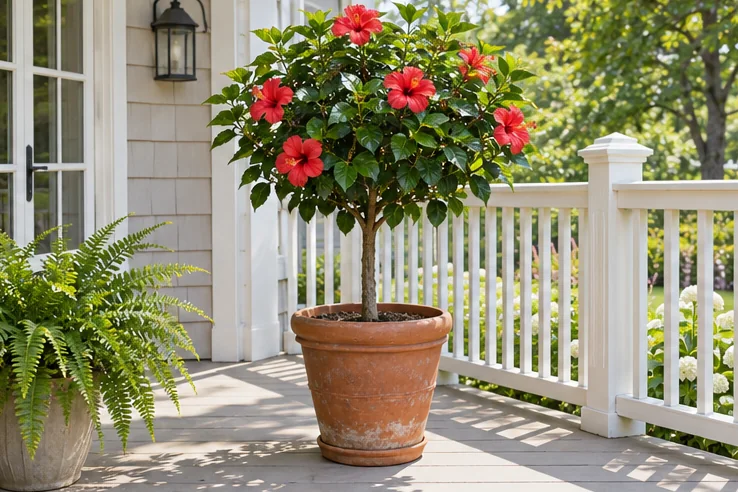
A patio hibiscus tree often has a straight lower stem and a crown of leaves and flowers at the top. This trained form is called a standard. Many are tropical hibiscus, Hibiscus rosa-sinensis. Check the label before deciding whether it can stay outside in your climate. A woody rose of Sharon and a hardy herbaceous hibiscus have different growth and winter needs.
Give a tropical standard bright light suited to tropical hibiscus, a draining pot and a place where its tall crown will stay stable. Prune selectively to preserve the shape you bought. Plan for moving it before cold conditions arrive if it cannot stay outdoors in your area.
Identify the trunk and branching form
Look for where the main stem gives way to a group of branches. The round head of a standard comes from training that concentrates foliage above the lower stem. Some plants may have braided trunks or several stems visible together. Check the seller’s information if you need to know whether a plant is grafted. A braided form alone provides little information about grafting.
Take a photo of the plant at purchase, including the base, branch junctions and tag. If shoots appear below the crown later, you can compare their position with the original shape. A confirmed graft can produce rootstock growth below the union. Ask the grower to confirm the union and the identity of a new shoot if you are unsure.
Compare the trained form with the eventual width of the crown. A narrow stem can make the plant look suitable for a tight corner, while branches can still obstruct a walkway once they fill out. Leave room at head height to tend the plant and see its flowers.
Set up a container that can stand upright
Use a stable pot with working drainage. Consider the full height and weight of the planted container. Wind can move the crown and create leverage on the pot. Place it in a suitable sheltered position where it receives the light it needs and where a tipping pot would not be a hazard.
When moving the plant to stronger outdoor light, introduce the exposure gradually. Compare how it looked in its previous location and how the leaves respond on the brighter side. Check medium moisture as weather changes. A dark patio surface, reflected heat or wind may make it dry faster.
Keep the pot where the drain holes can work and excess water can be removed. Look at the inside of any decorative outer pot after watering. If the container is heavy, plan how you will move it before the cold season. Choose a technique or equipment suited to its weight. Give the stem and crown support during the move without pulling on the top branches.
Water the root ball while the top grows
Check moisture below the surface and compare how the pot feels in several conditions. Tropical hibiscus in active growth can use water readily, especially in a bright summer setting. Water as needed and let it drain. A pot still wet after rain may need a longer wait for its next watering.
Watch the leaves and the soil together. Wilt in a hot place merits a moisture check, especially if the surface dries before the center. A plant in wet medium may still be stressed. If water runs straight through a dry container or sits for a long period, inspect roots and medium before adding new feeding or irrigation routines.
Rotate the container only where the setup permits it and the plant has room. See which part grows toward the strongest light. If one side produces much longer shoots, consider whether an exposure change or a light trim when suitable would help balance its shape.
Maintain the crown with light selective cuts
Start with damaged or interfering shoots. Follow an overly long stem to a point where a small cut can help preserve the outline. Keep healthy foliage in the main crown and avoid stripping branches from the upper stem just to make a perfect circle. Light timing and recent growth affect how quickly the plant fills in.
Look at shoots below the crown before removing them. On a confirmed graft, rootstock growth may compete with the desired upper plant. Use the grower’s guidance to identify and remove it properly. On a plant trained on its own roots, lower shoots may simply need selective removal where they change the intended form.
Move a tropical plant before cold weather
Check your area’s nighttime forecast and the guidance for tropical hibiscus. Move the pot to suitable protection before damaging cold. Choose a bright place where the plant fits without pressing the canopy against glass. Inspect the stems and leaf undersides before setting it next to other plants.
Once the pot is indoors, check how quickly the mix dries before watering again. Cooler conditions and a shift in light can slow drying. Remove loose damaged material and inspect the canopy as it adjusts. Keep a note of what worked for the move and the available light. The best patio setup lets you handle the plant safely while keeping its roots and distinctive crown in good condition through the year.