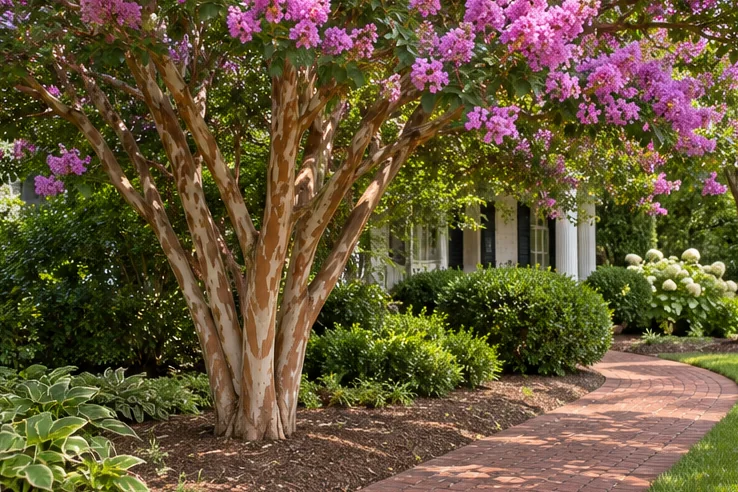
If you already have a crepe myrtle, begin with its structure and how it grew last year. The sunny side might flower well while a shaded branch stretches toward the light. A branch over a pathway might need a thoughtful cut. Match care to those observations as the tree moves from winter dormancy to spring growth, summer flowers and fall leaf drop.
Crepe myrtle is a garden name for several Lagerstroemia forms, including species selections and hybrids. The range of mature sizes is wide. If you still have a tag, keep it with your notes. The name can help you interpret the tree’s usual habit and compare pest or disease concerns with local guidance.
Winter is a chance to see the branch structure
Look at the stems from several sides after leaves fall. Follow crowded or crossing branches back to their attachments. Identify what you would gain from each proposed cut. Removing a damaged branch, opening access along a path and reducing contact between two limbs are distinct goals and may call for different work.

Crepe myrtles flower on growth made during the current season. This allows the tree to flower without needing a hard annual reduction. Cutting the main branches to stubs produces a very different growth pattern and can leave the original shape hard to recover. If an established tree is consistently too large for its position, discuss long-term options with a qualified arborist.
Look at the bark too. Exfoliation, or peeling in patches, occurs on many crepe myrtles and can reveal lighter or differently colored bark below. Check the whole branch and the surrounding bark if you see a change. Photograph anything new that looks like a coating, wound or attachment on the twigs.
Spring is the time to watch new shoots
Note when buds open and where new growth is strongest. Exact timing changes with local climate and the individual tree. A branch in colder or more exposed conditions can behave differently from one in a protected area. Compare the whole plant and nearby crepe myrtles before making decisions about living wood.
Check the soil as growth resumes. A recently planted tree needs closer moisture checks than an established specimen. Adjust watering for the weather and drainage rather than copying a schedule from another garden. Keep mulch from resting against the trunk if you use it, and keep lawn equipment away from the stems.
Notice suckers growing at the base and shoots crowded close together. Decide what form you want to retain. A single-trunk tree and a deliberate multi-stem specimen call for different choices. If the tree appears stressed, check its root area and light before adding fertilizer.
Summer flowers give you clues about the site
Look at the amount of direct light reaching the crown during the flowering season. Crepe myrtles usually flower most heavily in full sun. If a nearby tree has filled out and shaded one side, the distribution of flowers may help you see that change. Check for unusual weather and anything that interrupted spring growth as well.
Healthy panicles, the branching clusters of small flowers, may appear at the ends of new shoots. Flowering time and display vary by plant and season. Keep the main branches intact when you tidy a small tree. For a small plant within safe reach, remove spent clusters if you prefer a tidy look and can do so without changing the main branches. Large trees can simply be left to finish naturally.
If you see a pale powdery coating, honeydew or black sooty growth, take close photographs. Powdery mildew can coat leaves and other new growth. Aphids and some scales can produce honeydew, a sticky residue that can support sooty mold. Look for the insect or other distinguishing sign before deciding which problem is present.
Clemson Extension describes several pests and diseases affecting crepe myrtle. Use its descriptions with local advice. A photo of a twig, a leaf underside and the whole tree helps someone see whether the issue is scattered, confined to one part or widespread. The right response depends on the identification and severity.
Fall is a good time to review what happened
Note when flowering ended and whether foliage or bark symptoms persisted. Look at the relationship between the canopy, paths and nearby plants. If one branch keeps rubbing or an irrigation head keeps soaking the base, address that specific issue in the appropriate season.
Keep a record with the plant’s name if known, its main flowering period, any cuts and the dates of unusual symptoms. Compare the photographs over a couple of seasons. This makes it easier to distinguish the plant’s ordinary seasonal changes from changes in light, structure or health that warrant attention.
After leaf drop, note where evening light hits the bare branches. This is a good time to identify the forks and bark that make the tree visually interesting from indoors before planning a winter cut.