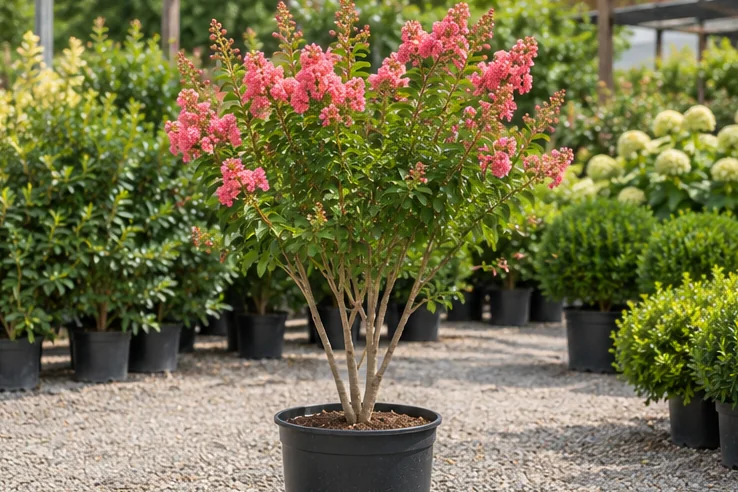
Read the botanical name on the nursery tag first. Lagerstroemia indica is a species of crepe myrtle, and the common name also covers hybrid plants such as crosses with L. fauriei. If you want the species or a particular selection, buy a plant identified down to that level. Use the label and regional experience to judge its mature size and likely performance.
Choose a sunny site with well-drained soil and room for the full plant. Size, flower color and growth form vary widely among crepe myrtles sold in the trade. A plant that fits naturally is easier to establish and maintain than a large selection installed where you need a narrow shrub.
Look at the label and the plant together
Check the genus, species and any cultivar name. The cultivar is a named selection. A tag might list a common name and color on the front, with more details in small print. If the name is unclear, ask the nursery for the botanical information used by the grower. Keep a photograph of the complete label.
Examine growth from the base to the top. Look for sound stems and leaves, check the trunk for obvious damage and ask about anything that looks unusual. Think about the form you want to keep. A well-labeled plant already trained toward a multi-stem or single-trunk habit gives you a better picture of what you will be tending.
Disease resistance can be a useful buying detail where local crepe myrtles commonly develop powdery mildew. Ask which disease was evaluated for the exact cultivar. Some hybrid selections were bred for resistance or other traits, and those details belong to the named plant. The general term hybrid offers little guidance by itself.
Check the site under summer conditions
Look at the amount of direct sun when nearby trees are fully in leaf. This species flowers on new growth and usually gives its best display in full sun. A bed that looks sunny in early spring may become shaded by the time the plant forms flowers. Check both the path of the sun and the final width of the neighboring trees.
Make a scale sketch of the likely mature crown with room around it. Include the side of the house, paths and any view you want to keep. A narrow gap beside a gate can be practical for a compact form and unsuitable for a plant that needs more crown space. Revisit the tag if the position would require regular hard cutting.
Look at how the soil behaves after rain. Check for standing water, runoff and irrigation from nearby areas. The new plant needs enough moisture to establish, with air available around its roots. If the ground stays soggy around the roots after rain, look for a different planting spot or get help assessing the drainage.
Plant at a time you can follow up
Ask when woody plants are best transplanted in your area, and choose a period when you can monitor the root ball. Water the nursery container if it needs it before planting. Follow local planting advice so the top of the root system sits at the right level and the surrounding soil can support new roots.
Water after planting and inspect the original root ball during the following weeks. Soil around the planting hole may feel moist while the container medium has started to dry. Check both. Change the irrigation interval as weather and growth change. If you add mulch, keep it away from the stems so you can see the base.
As the plant starts to grow, note where new shoots appear and whether the leaf color is similar across the plant. A newly moved shrub or tree may need time to establish. Check light, water and drainage before feeding in response to every period of slow growth.
Preserve a form that suits the site
Remove damaged or rubbing growth only when you can identify a sensible cut and make it safely. If you are training a young plant, select the principal stems according to the form you want over time. Skip severe reductions to force a size the cultivar will repeatedly outgrow.
The plant can produce flowers on the current season’s shoots without topping, the practice of cutting back main branches to stubs. Leave enough structure to see where future branches will grow. For high branches or a large tree, an arborist can assess the work.
Track establishment during the first full season
Take a picture after planting, then again when the plant has a full set of leaves. Note its light, how the soil drains and the date of any flowering. If leaves develop a powdery coating or other unusual signs, photograph the affected areas and confirm the problem before treating it. The record will help you tell which issues belong to the site and which merit a closer look at the plant.