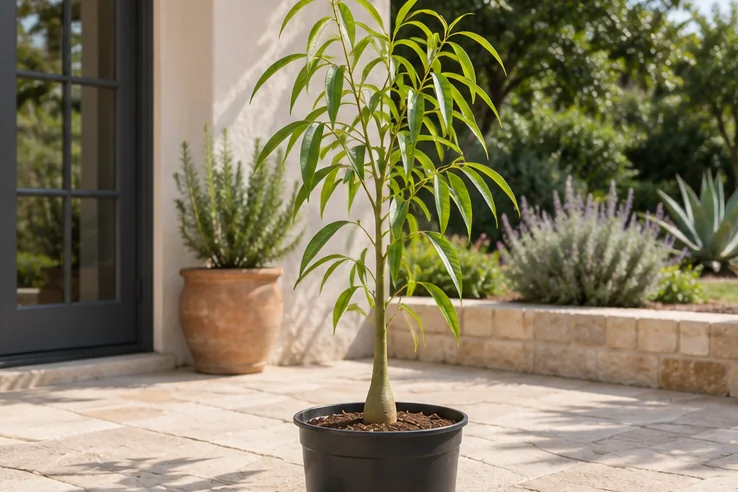
Start with an identified Brachychiton rupestris sapling and a bright, freely draining place where you can watch its roots and shoots. A young Queensland bottle tree may have narrow or divided leaves unlike those on a mature specimen, and its trunk may have only a modest swelling. Check the label and source before deciding its identity from its shape.
Some people raise the tree from seed. Buying a nursery sapling lets you skip the earliest stage and inspect a specific plant before taking it home. Either choice needs a plan for where the tree will grow as it gets larger. A temporary container can be useful while the plant is young.
Confirm the identity while the tree is small
Ask the nursery for the full botanical name. Similar common names can refer to related trees or unrelated plants with swollen stems. Australian National Botanic Gardens and the Royal Botanic Gardens Victoria describe features of B. rupestris. Use the tag and the plant’s known source alongside visible traits.
On a small plant, examine more than one leaf. Juvenile foliage can be divided or much narrower than the adult growth. A seedling showing that shape can still be a correctly labeled bottle tree. The trunk, foliage and larger structures can give you additional clues as the plant develops.
Keep the tag and take a photograph after purchase. Include the pot, trunk and foliage. This provides a reference if later growth looks different and gives a local grower useful information without expecting them to identify the plant from a single close-up.
Decide between seed and a nursery sapling
When buying seed, use a reputable source that provides a botanical name and instructions. Follow the supplier or botanic garden propagation directions for the material you have. Track the sowing date and keep the label with the container. This will make the next transplant and any comparison of growth easier.
The tree develops woody fruits. Their contents may have irritating hairs, so avoid opening or handling unknown pods casually. If you are working with seed from a known tree, use the handling directions provided by a reliable source. Prepared seed from an identified supplier is simpler for a first attempt.
A sapling from a nursery gives you an established set of roots and more visible growth. Ask how it was kept, including how much direct sun it received and how the nursery checked water. The change from a sheltered sales area to an exposed site can matter as much as the difference between two containers.
Manage the pot as a temporary growing space
Use a pot with functioning drainage holes and a medium appropriate for a woody plant grown in a container. Keep enough room for the roots and choose a container you can inspect readily. After watering, check that the pot drains. Before watering again, see how damp the mix feels. A hot, exposed pot may need water sooner than one in a sheltered spot.
Give the young tree a bright location and adjust it gradually if you are moving it to stronger sunlight. Check the leaves and the moisture of the potting medium during the transition. A container with little shade can dry more rapidly as weather changes. Sheltered plants can dry more slowly.
Inspect the root area if water begins behaving differently or roots appear at the bottom. A plant that has filled its pot may need a larger container or its permanent position, depending on the season and your location. Choose space before the decision becomes urgent. An oversized container filled with medium that stays wet for a long time can complicate watering.
Plan for the move into the ground
Set a tentative date based on the local planting season and the risk of cold or strong heat. If you are still testing the site, look at it across several weeks. A location that seems sunny today may have different light after a nearby tree leafs out. A spot that stays moist after rain may be harder to manage once you are watering the newly planted root ball.
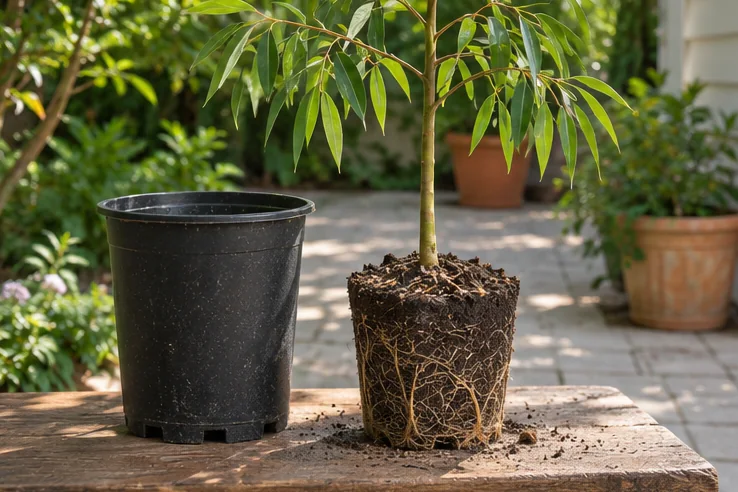
Ask a local nursery about cold tolerance of young plants and established examples. The Australian accounts describe the species in climates that can differ from yours. Local performance matters for a plant that may spend years outdoors. A large permanent indoor pot comes with different limits on light, root space and eventual size.
Move the sapling when you have a suitable permanent position and can monitor its water while it establishes. Follow planting guidance for the local soil and nursery stock. Keep a label and take another photo at planting. Compare new foliage and trunk growth over the following seasons. The bottle shape is a long-term trait, so judge the young plant by sound roots and healthy current growth.
Photograph the label beside the sapling while you can still read it. If the tag breaks or fades, you’ll have the nursery name when you need it.