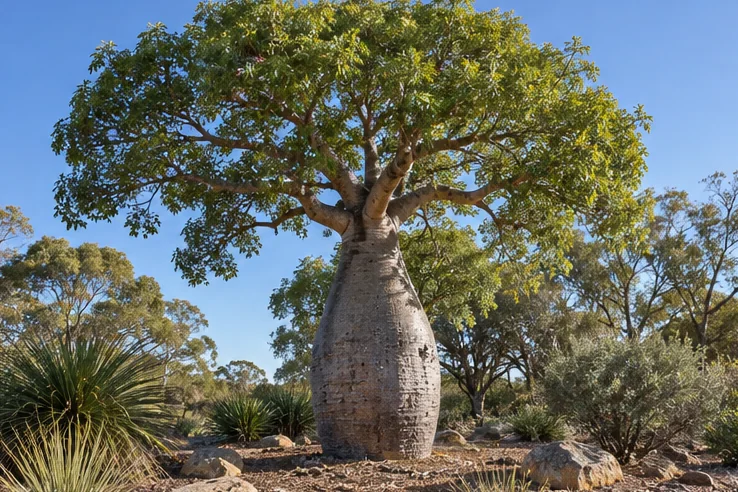
A Queensland bottle tree needs a spot where its trunk and crown can develop over years. Give it sun, soil with suitable drainage and a climate mild enough for a young tree to get through winter. If you are considering the tree for a small courtyard or a planting strip near buildings, start by drawing the space it will occupy at maturity.
The Queensland bottle tree is Brachychiton rupestris. Australian botanic garden sources describe the swollen trunk that gives the species its common name. A nursery tree may have a much slimmer trunk and different-looking leaves from the mature trees that inspired you. The purchase should make sense for the tree’s eventual form and your site.
Confirm the identity and compare mature size
Ask for the botanical name on the label. Several trees have bottle-related common names, and Brachychiton includes more than one landscape species. Check the source of the nursery plant and compare it with an Australian botanic garden description. Do this before settling on its long-term position.
Look at the mature dimensions reported in the available profiles and ask a local nursery about existing trees in a similar climate. Australian landscape figures describe plants growing under their own conditions. U.S. sites can differ in winter exposure, soil and summer watering. Use several observations to judge what you may need to accommodate.
On a sketch, add a circle for the space the trunk will occupy and another for the crown. Mark walls, utilities, paving and access routes. A tree planted for its trunk should have space around that feature to grow and be seen. If keeping a clear passage would depend on repeated major pruning, choose another site while the tree is still on paper.
Look at how the site handles cold and water
Compare the yard with sheltered sites where the tree is known to grow. A warm wall, wind exposure and a low point that collects cold air can create different conditions in the same yard. Talk with an experienced local grower about young trees as well as established ones. A mature tree down the street may have roots, size and shelter quite different from those of a recent transplant.
Visit the planting area after rain or irrigation. Note where water accumulates and how long it stays there. A hot, sunny patch can still have a poorly drained root zone. If a downspout or scheduled lawn irrigation feeds the site continually, account for that in the planting decision. Choose a spot where you can manage the water it receives during establishment.
For a street-facing plant, consider reflected heat and accessibility. A tree close to a drive may receive heat from pavement, regular irrigation from fixed sprinklers, or damage from vehicles and yard equipment. Place the tree where you can check the soil and make room to protect the base as it grows.
Give a young tree a useful start
Select a healthy specimen with a clearly identified trunk and a healthy root ball. Talk with the nursery about the appropriate season to plant in your climate. Avoid scheduling a transplant just before an expected period of extreme conditions if you can choose an easier time.
Plant in accordance with local tree-planting guidance and the nursery’s instructions. Keep the base at the appropriate level and give the roots room to establish in surrounding soil. Water after planting, then check moisture in the root ball and adjacent soil. The original nursery medium and the garden soil can dry at different rates.
Keep competing growth away from the base and leave space to see the trunk. If you mulch, keep the material clear of the trunk surface. Where a tree needs support, follow the nursery or a qualified arborist’s guidance and check the support as the tree grows. A tie that starts loose can become tight with time.
Monitor growth before trying to shape the tree
Look for new leaves and shoots and note their timing relative to weather. The trunk can take years to display the classic bottle form. Give a young plant time to establish and check soil before deciding that slow growth requires more water or fertilizer.
Inspect for damaged shoots, rubbing branches and problems around the root zone. In a landscape tree, plan pruning around a specific need. Consult a qualified arborist for branches too high or large to manage safely, or if you need to plan structure beside a driveway or building.
Compare photographs of the tree from the same place each year. Include the trunk base and surrounding paving. Use the record to spot changes that matter for the site, including encroachment on a route or growth that has become more vigorous than you expected. If you can give the tree room, light and suitable climate conditions, it has the space to develop the silhouette you chose it for.