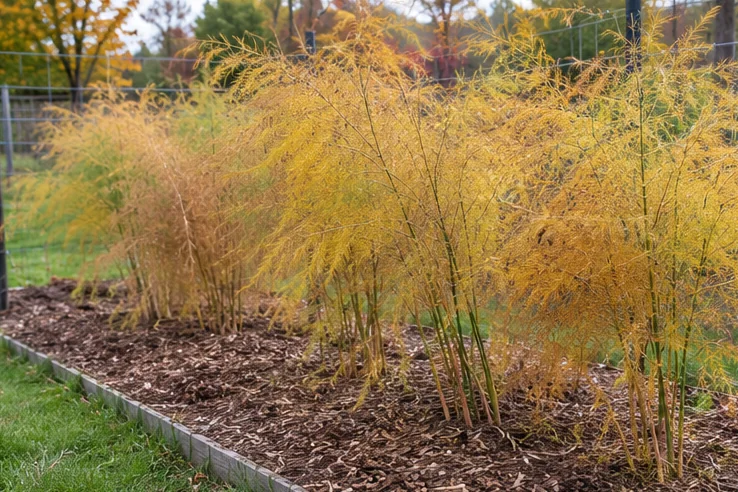
Leave asparagus foliage in place while it is green. The tall, fine leaves that develop after harvest help supply the crowns below ground. Wait until the ferns have died back, then remove them in late fall when practical or in early spring before new spears emerge. Check the bed for debris and pest concerns as part of the cleanup.
The crown is the living underground structure that sends up new spears. Winter care is about protecting that part and preparing the bed for spring. A cold night or the end of harvest is a reason to check the plants. Use the actual condition of the ferns to time the cut.
See what the plant is doing after harvest
After you finish taking spears, let new shoots grow into the tall fernlike tops. The plant continues growing through the leafy season. Mark the edges of the bed while you can see how much space the foliage occupies. If you need to pass beside it, keep a clear route rather than cutting healthy stems for access.
Check the foliage as weather cools. Some stems may turn yellow before others. Observe whether there is healthy green material that is still standing and what part of the bed is declining. A patch that shows unusual early damage or insects merits an inspection. When the ferns across the bed yellow late in the season, that change can be part of normal dieback.
A strong freeze can accelerate the change in appearance. Wait until the ferns have browned and finished their seasonal growth before cutting healthy material away. If a portion stays green, let it continue working while conditions allow. Revisit the bed when that foliage has naturally finished.
Choose between late fall and early spring cleanup
Late fall cleanup can be practical once the ferns are brown and the bed is easy to reach. Removing dead foliage can also reduce places for asparagus beetles and other pests to overwinter. University of Minnesota Extension describes the pest’s use of old stalks and garden debris as shelter. Check what you observed during the growing season.
If weather or soil conditions make fall work difficult, plan to remove the dead ferns in early spring. Do it before spears begin to emerge so you can work around the existing stems without damaging new growth. Set a reminder based on when your patch usually starts and check sooner in a warm spring.
Pick a day when you can see the bed clearly. Clear loose debris first so you know where the stalks enter the soil. Use clean tools to remove the dead tops near the soil surface while keeping the crowns and nearby plants intact. Avoid digging around the old stems just to pull them out.
Keep pest observations with the cleanup
Look for seasonal signs such as beetles, feeding damage or eggs during the year. At cleanup, record where signs were concentrated if you saw them. Remove the dead fern material and handle disposal according to local guidance, especially if there were disease or insect problems. This keeps potentially affected material from accumulating around the crop.
Asparagus beetles can use several sheltered places. Tidying ferns helps with habitat management, and spring observation still matters. Check emerging spears and nearby debris early in the new season. If you find an insect, compare it with regional Extension descriptions before making a treatment decision.
Take care around other parts of the planting. Fallen leaves can collect where a bed meets a fence, and broken stems can lodge in a path. Clear dense debris where you can, then look at whether mulch and soil need attention. Avoid disturbing the root area as you tidy.
Protect the bed based on local conditions
Assess how water leaves the bed during wet periods. Heaving, standing water and repeated traffic on wet soil can affect the planting site. Keep people and equipment on established paths. If water gathers for a long time, consider the drainage problem on its own.
Discuss winter cover with local Extension advice if your winter conditions or planting need it. The decision can depend on climate and soil, and a thick layer may affect how easily you see new spears. Avoid piling up material just because the tops have disappeared. Keep labels or bed markers where you can find the rows in spring.
Base fertilizer decisions on the crop, soil condition and regional recommendations. Fall cleanup can be completed without automatically applying fertilizer. Use the rest of your care record to decide whether the bed needs a soil test or another change before growth resumes.
Be ready when the spears appear
In early spring, check that the old ferns are out of the way and the bed is accessible. Look for the first spears and record the date. Keep that date with the previous year’s cleanup timing and pest notes. Over a few seasons, the record will show when your own patch usually finishes its leafy growth and when it needs to be ready for spring.