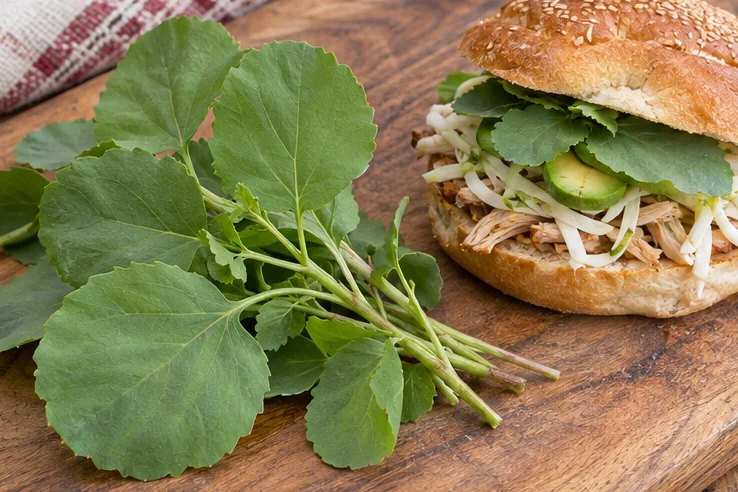
Pápalo is a fresh aromatic herb used in Mexican cooking. Its flavor can remind people of cilantro, with a stronger note that can stand out in a sandwich or salsa. Add a small piece to one bite first. If you like what it does with the filling, increase the amount a little at a time.
When available, look for an identified bunch at a Mexican market, a specialist grower or a grocery that carries regional herbs. The leaf is the part you usually encounter in the kitchen. Use the fresh leaves when you want the herb’s aroma to stand out in the finished dish.
Know the name when shopping
Pápalo is associated with Porophyllum ruderale, an aromatic plant in the daisy family. The exact form and names used may vary by region or seller. You may see pápalo or pápaloquelite, a name that places the plant among quelites, a broad group of greens recognized in Mexican food traditions. Ask which herb someone is offering if several bunches are sold under related names.
The leaves are often broad relative to the thin stems, and they can look noticeably different from the divided leaves of cilantro. Shape and aroma help you recognize a labeled bunch in the kitchen. For a reliable purchase, use a seller who can identify the edible herb, and keep its name with the bunch if it will share a drawer with similar greens.
Look for sound, fresh leaves. Before serving, wash the pápalo under running water and blot it with a clean towel. The FDA advises washing fresh produce this way whether it came from a garden, market or grocery. If you buy pápalo alongside culinary sage or other herbs, keep the labels separate until you have identified each one.
Taste it with one familiar ingredient
Tear off a small piece and taste it beside something mild you already use, such as a bit of bread from the sandwich you are making. Then try a second piece alongside the main filling. The aroma can be more apparent when the leaf is newly torn. A small tasting helps you decide where it fits in the finished food.
People reach for comparisons with cilantro because a description of a strong herb can be hard to pin down. Those comparisons are subjective. Texture, freshness and the accompanying ingredients change the impression. Taste the actual bunch before planning how much to use in a recipe written for a different herb.
If you are serving people who have never tried it, put a few clean leaves on the side. They can try a bite with and without a piece of leaf. This works for a group meal and gives everyone a chance to decide how pronounced they want the flavor to be.
Add it fresh to cemitas or other foods
Pápalo is associated with the cemita, a sandwich linked with Puebla. In that setting, the fresh leaf adds an aromatic layer among the bread and fillings. Start with a small amount and distribute it across the part of the sandwich you will taste first. You can add more as you go.
Mexican agricultural sources also describe traditional fresh uses with foods such as tacos and salsas. Try a few torn pieces with a prepared portion before mixing them through a bowl. Finishing a serving with fresh leaves lets you judge the effect and preserves the separate character of the other ingredients.
Where a recipe names pápalo, buy it if you want that particular flavor. If you are improvising dinner, use the herb where its strong presence seems welcome. A side of leaves beside several dishes can be a practical way to discover which pairing you prefer. Keep spare leaves separate until you know you will use them.
Understand the practical benefits
In the kitchen, a small amount of leaf can bring plenty of aroma and flavor. When a sandwich has several rich or mild layers, a distinct fresh herb can make the individual bites more interesting. Pápalo can also help you make a version of a regional dish that includes an ingredient documented in that tradition.
Descriptions of traditional uses sometimes mention uses outside cooking. Those observations are different from clinical evidence for treating a condition. Consider the fresh leaves here as a culinary ingredient. When evaluating a claim about a pápalo supplement, look for evidence specific to the product, dose and intended use.
Plan a first recipe around a small bunch
Choose one meal you already know, such as a sandwich. Try one leaf or a small portion in a single serving and taste the result before it sits too long. Note the label that came with the bunch and which ingredients worked well with it. If you buy it again, that information will help more than trying to remember whether the herb merely tasted like cilantro.
References
- Royal Botanic Gardens, Kew, Porophyllum ruderale
- Royal Botanic Gardens, Kew, Medicinal Plant Names Services Pápalo Record
- Mexico Secretariat of Agriculture, Pápalo, la hierba alas de mariposa
- Mexico Secretariat of Agriculture, Pápalo Factsheet
- U.S. Food and Drug Administration, Selecting and Serving Produce Safely