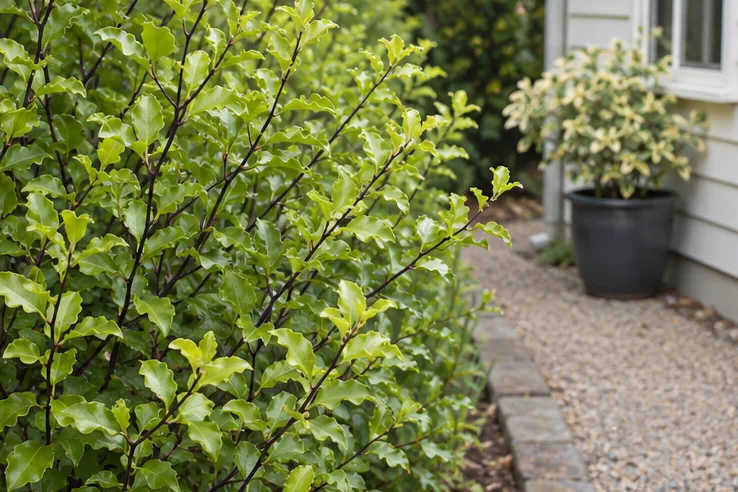
Choose a Pittosporum tenuifolium by mature size, exposure and foliage. The species, also called kohuhu, is an evergreen from New Zealand with small leaves often set against dark stems. Some selections make a compact mound. Others can develop a broad, tall screen. Find out which plant you have before deciding how close it should go to a path, wall or neighboring shrub.
A reasonably bright, sheltered location with well-drained soil gives this shrub a good place to start. If you live near the colder edge of where it is grown, check local experience. A plant in a container has different winter exposure from one growing in the ground, even in the same yard.
Compare the forms you want to use
The species itself can grow into a tall, broad evergreen shrub. Use it where a screen has room to fill in and where you can reach both sides for maintenance. The narrow, often undulating leaf edges and dark stems can be visible on several selections. Check the complete cultivar name for the expected size.
‘Tom Thumb’ is a compact selection grown for the dark purple tones of its older leaves. New growth can appear greener before changing color. Think about where light will fall on it. In a pot beside a sunny route, the mature foliage can be appreciated at close range. Its compact habit suits a smaller planting than many screening selections.
‘Silver Queen’ has variegated foliage and a more upright, substantial habit than a compact mound such as ‘Tom Thumb’. Compare the nursery’s mature measurements and look at the whole plant, especially where branches will be visible beyond a fence or low wall. The light-colored margins can stand out against darker evergreens.
Descriptions of cold hardiness from the UK use their own rating system. Interpret those profiles alongside U.S. regional experience. Ask a nursery or local Extension office which selections have come through several winters in situations like yours.
Pick a site for drainage and shelter
Watch how much direct light the chosen area gets across the growing season. Check for winter wind, shade from nearby evergreens and heat from a wall. If freezing wind is a recurring problem, look for a position that reduces exposure and still gives enough light.
Check the ground after a long rain. A shaded low point with lingering puddles may be a poor site for a plant that prefers drainage. In a container, use a suitable potting medium and drainage holes. Place the pot where it can empty without leaving the shrub sitting in water.
Before planting a hedge, mark each plant’s expected footprint and your route to it. Decide whether you want a tightly clipped line or an informal screen with individual plants still visible. Space the plants for the kind of hedge you want, allowing for their mature width, light and room to trim. Use the cultivar’s stated dimensions and local guidance for the actual interval.
Check moisture during establishment
Plant during suitable weather and follow nursery or local guidance for the root ball. Water well after planting, then check how fast the original potting material and the surrounding soil dry. On the same day, one may be much wetter than the other. Adjust watering based on the root area and local rain.
For a potted plant, inspect the weight of the pot and the depth of moisture. Wind and sun can dry a pot quickly. In a cold or wet period the same container can stay damp for some time. Use a suitable position and pot size so you can check it without repeatedly moving heavy containers.
Look for healthy new shoots during the normal growing season. If leaves look damaged after cold weather, note where the damage occurred and whether stems remain alive. Wait for a clear picture of the growth before making major cuts. This is especially useful along a screen where one end may be more exposed.
Prune to suit the form
For a free-growing shrub, make light cuts where shoots obstruct access or damage needs removing. If you want a clipped screen, plan regular modest maintenance while keeping enough leafy growth. Leave yourself enough room around the hedge to see what each cut will do.
A variegated selection may produce a noticeably different shoot. Check that the different color is consistent with that particular cultivar before removing it. Compare new foliage with older foliage, as several selections change color as their leaves develop.
Review the setup after a full growing season. Check the height, width and growth at the base, then compare the potted shrub or hedge with the space you allotted. If plants are filling in where intended and drainage and shelter are easy to manage, you can focus future pruning on keeping the shape you chose.
For pots beside each other, leave a gap you can use to inspect the drainage and reach the stems on the inward-facing sides.