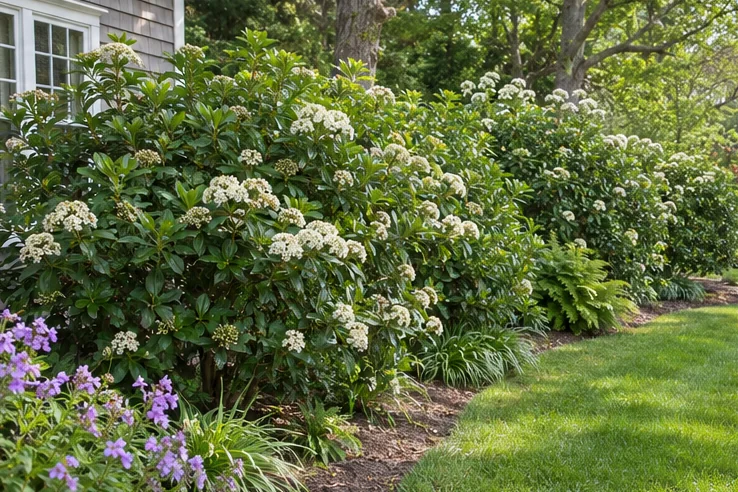
Start by deciding what you want to see in winter. An evergreen screen can provide foliage through the year where the species is suited to the climate. A deciduous viburnum drops its leaves and may offer flowers, ornamental fruit, fall color or a branching outline at different points in the season. Both can make useful garden shrubs when the plant and space fit.
The genus Viburnum includes plants with very different habits. Read the botanical and cultivar names before buying a hedge or planning for fruit. Labels that give only viburnum and a flower color leave out information about winter foliage and eventual width.
Compare types by the job they will do
Arrowwood viburnum, Viburnum dentatum. An upright deciduous shrub with clusters of pale flowers and possible blue-toned fruit. It can work in an informal planting where its width and growth habits fit. Check the native range for your location and consider viburnum leaf beetle where it occurs.
Blackhaw, Viburnum prunifolium. A deciduous species that can develop into a large shrub or small tree. Use it where you can enjoy the branching form and leave room for the crown. A narrow clipped strip is a poor match for the shape it can develop.
Koreanspice viburnum, Viburnum carlesii. A deciduous option valued for fragrant spring flowers. Put it where you pass close enough to notice them, and compare mature dimensions of the selections available. The location should still provide its light and soil needs.
Doublefile viburnum, Viburnum plicatum f. tomentosum. Branches can form horizontal tiers with flower clusters visible along them. Give it space on both sides so the branching pattern can be seen. Check the form on the tag, since names under V. plicatum can refer to plants with different floral displays.
Prague viburnum, Viburnum × pragense. This hybrid can serve as a foliage screen where conditions suit it. Check winter performance, the expected amount of foliage retention and eventual size locally. Ask how plants in an exposed position have behaved relative to protected ones.
Laurustinus, Viburnum tinus. A mild-climate evergreen with pinkish buds and pale flowers. It can work as a screen or a specimen in sheltered locations. Check local cold suitability before choosing it for a year-round effect.
Lay out a hedge by its mature width
Measure the distance across the planting strip and mark paths and walls. Include the space someone needs to access both sides. A young row may fit neatly while the branches are small. Visualize the same row once stems reach their expected width.
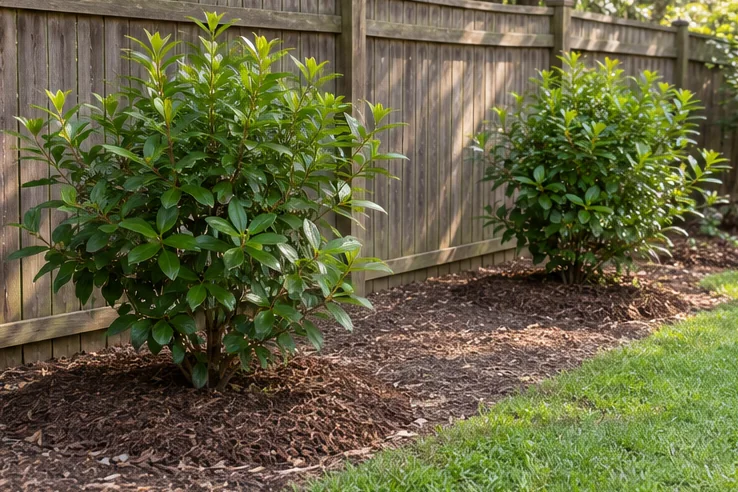
Decide whether you want plants to overlap into a screen or retain their separate outlines in an informal border. Use mature dimensions for your exact selections and local guidance to set intervals. In a mixed hedge, let each plant have enough space for its own form. A broad shrub can shade a compact neighbor long before both reach full height.
Look for differences in light and soil along the row. One end of a hedge may sit in the shelter of a wall while the other takes the full wind at a corner. Check where water runs after rain. Choose plants suited to each area or make a shorter hedge where you can provide consistent conditions.
Account for flowers and fruit
If flowers matter, find out when the type you are considering sets its buds. Some gardeners shape viburnums after flowering so they can see the display first. Heavy clipping can remove branches that would carry flowers. For an informal planting, a few selective structural cuts can be easier to time than repeated shearing.
Fruit may depend on pollination from a suitable genetically different plant of the same species or a compatible selection. Requirements vary. Check recommendations for the cultivars you are buying, including whether they flower at the same time. Several plants of one clone can still have the same pollination limitation.
If your goal is ornamental fruit, ask whether local growers see it consistently on that plant. Weather, pollination and the amount of flower-bearing growth all matter. Treat the fruit as a garden feature and avoid making food decisions from a common name.
Check regional pest information before planting several
Viburnum leaf beetle susceptibility differs among species. Cornell University lists arrowwood among susceptible types. Local pest pressure matters if you are considering a long planting of a vulnerable species. Find out whether the pest occurs where you garden and ask for species or alternatives that fit the site.
If existing plants show chewed leaves, record the part of the plant affected, the time of year and any insects you find. Ask for identification before treating the whole hedge. Round out the assessment with light, moisture and the history of pruning. These observations help you choose the shrubs and maintenance that suit the space over several seasons.
Where leaf beetle is established, ask a local nursery about less susceptible plants before ordering a long row from a single selection.