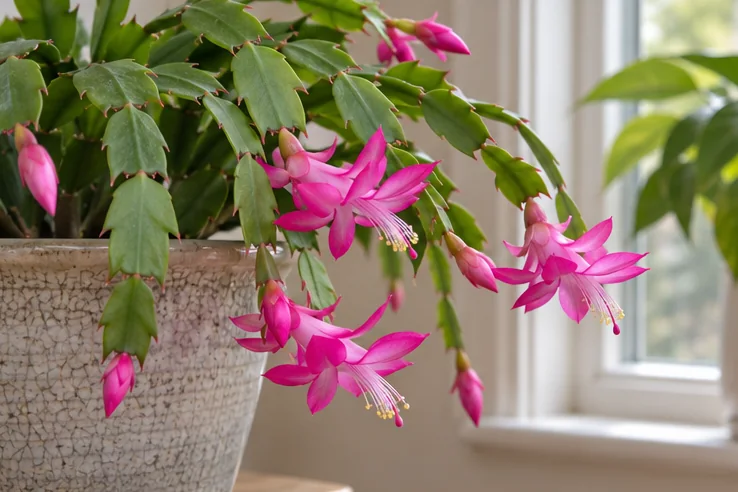
Give Schlumbergera bright, filtered light, a draining pot and moisture checks during active growth. In fall, longer nights and suitable temperatures can encourage buds. Once the buds form, try to keep the plant’s conditions steady while they develop.
Christmas and Thanksgiving cacti belong to Schlumbergera, a group of forest cacti. The plants have connected flattened stem segments. Looking at the edge of a mature segment gives you a better identification clue than the date you bought the pot. Flower timing can shift with indoor conditions and nursery production.
Read the edges of the stem segments
A Thanksgiving cactus often has pointed teeth along the segment margin. Christmas cactus typically has rounder scallops. Look at several grown segments, ideally from different stems. New pieces may be small or distorted before they finish expanding. The plant label and mature growth together help you assess the name.
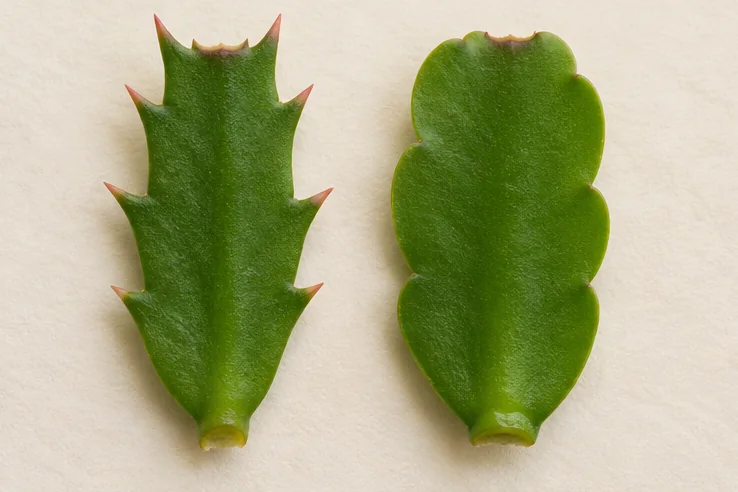
Easter cactus belongs to a separate group. If several holiday cacti are sold together, photograph the tag and a mature segment. The details can help you find the appropriate care guide later. The flowers may open around different times of year, and indoor lighting can move that schedule.
The segments are stems. The growth tips, junctions and way the stems arch are all useful when you decide how much space the plant needs. A hanging or raised pot can let long stems extend, while a broad shelf can make it easier to lift the pot for watering.
Arrange light and drainage together
Choose a bright position with protection from the strongest sun. Check how the exposure changes during the year and whether any stems touch hot or cold glass. If you move a plant to a brighter location, change conditions gradually and watch the stems’ appearance and pot moisture.
Use a freely draining medium that still holds useful moisture for growth. A suitable mix for epiphytic cacti leaves open spaces around the roots. Epiphytic plants can grow on other plants in their natural habitat, where organic debris and air can surround the roots. A tight mass of wet potting medium creates different conditions.
Make sure the pot has functioning drainage holes. If it sits inside an ornamental container, let water drain before putting it back. Keep the arrangement easy to inspect. A long stem trailing below a heavy pot can make it difficult to lift unless you have planned where to hold it.
Let the medium guide watering
Check the surface and below it before watering. During active growth, water when the medium has begun to dry and let excess escape. The timing depends on room conditions, medium and container size. A small hanging pot may dry faster than a large container in a sheltered spot.
In a cool period, check the root zone before watering again. If the stems look limp, determine whether the mix is dry or has been wet for a long time. Those conditions call for different responses. Look for firm bases and inspect drainage when a plant fails to regain its usual appearance.
After repotting, note how long the new medium stays moist. It may behave differently enough to make last year’s schedule misleading. Check the first few watering cycles while paying attention to any new stem segments.
Give a healthy plant a suitable bud period
University of Minnesota Extension suggests 65 to 70°F during the day and 55 to 65°F at night for bud formation. With nights around 60 to 65°F, allow at least 12 hours of complete darkness each night for about six weeks. An evening lamp can interrupt that stretch even when outdoor days are short.
A plant near a window in fall may experience cooler nights than one beside a heating vent. Minnesota Extension notes that around 55°F at night, buds may develop even without the same dark interval. Check conditions at the pot and leave it where the plant still receives bright, filtered light by day.
Once buds appear, leave the pot in place if you can and keep checking the mix before watering. Buds can drop after environmental shifts. If several drop, note whether the plant was recently moved, exposed to a temperature change or left in very dry or wet medium. Look at the whole situation before making another abrupt change.
Start a new plant from healthy segments
Choose a sound piece made up of connected stem segments and separate it cleanly. Follow a suitable propagation guide for handling the base and placing it in a draining medium. Keep the cutting in bright filtered light and check moisture carefully while it has few or no roots.
Label the cutting with the parent name and date. Watch for new growth before deciding it needs more room. On the main plant, record the months when healthy segments and flower buds appeared. A few notes over a full cycle can make the next season’s light, water and flowering decisions easier.