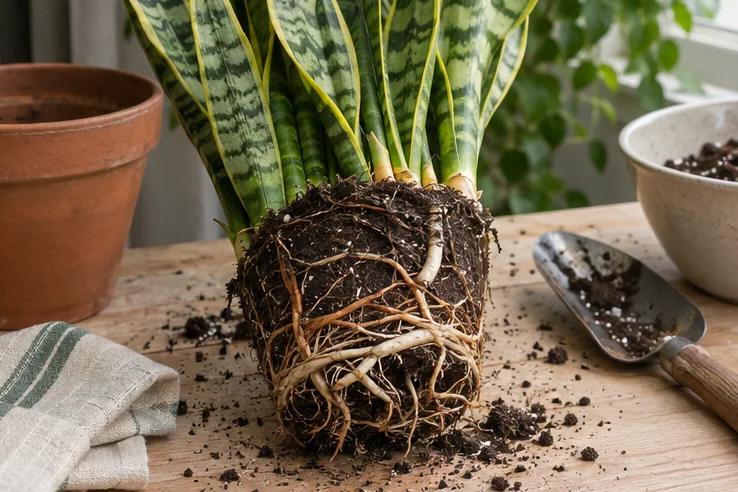
Check the roots and the base of a snake plant if its leaves are collapsing and the medium has stayed wet. Soft, mushy roots or a soft rhizome give you stronger evidence of rot than yellow leaves by themselves. If part of the underground stem and some roots remain firm, you may be able to separate the affected tissue and repot the sound growth.
Also work out why water stayed around the roots. An undrained decorative pot, aging mix or a container too large for the root system can prolong wetness. Fix that part of the setup or a repotted plant may go back into the same conditions.
Check the pot before watering again
Feel the medium below the surface and look at the drainage holes. If there is a nursery pot inside a heavier outer container, lift it out and check for standing water. A dry-looking top can sit above a wet root zone. Keep the observations together with the plant’s symptoms.
Look at the base of the leaves and how firmly they stand. A soft dark area close to the medium, new leaves falling over and a pot that has remained wet deserve a root inspection. A single older leaf changing color has several possible explanations. Check recent changes in light, temperature and watering as well.
If the plant is firm and the mix is dry, consider other causes before cutting anything. Low light, a long dry period or natural aging can call for different care. Knowing how the plant was kept gives you a starting point. Touch and smell around roots and stems will give you more information when you lift it.
Inspect roots and rhizomes gently
Slide the plant out of the pot while supporting the base. Remove enough loose mix to see several roots and the rhizome, the underground stem connecting shoots. Examine texture. A brown or stained root can be firm. Soft, collapsing or hollow material is more concerning. Check how much of the clump has softened and where firm tissue begins.
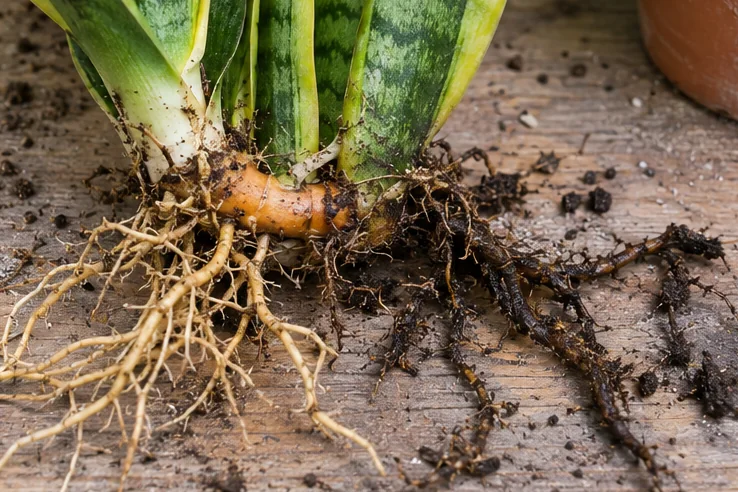
Some snake plants have several separate shoots joined below the surface. One can have a sound base while the next has softened. Follow the connection you can see. Lay the plant out so you know which roots belong with the part you want to keep. Handle the sound growth carefully and protect it from being crushed.
Use clean tools to remove clearly rotted parts if there is viable growth left. Take care to preserve roots and solid tissue on the section you want to save. Work in stages and check the texture at each cut. Dispose of the old wet medium and clean the work area and tools before handling other plants.
Pot the surviving section to match its root system
Use a clean container with a working drainage hole. Select it for the firm roots that remain. After losing a substantial part of the root system, a division may need a smaller pot than the parent clump did. Less unoccupied medium can make it easier for the pot to dry after watering.
Use a fresh porous mix suitable for snake plants and other succulents. Set the sound section at an appropriate depth without packing mix against soft or damaged leaf tissue. Keep it in a bright suitable location. If it is recovering, protect it from abrupt extremes while you check the medium and the base.
Base the watering routine on how many roots survived and how quickly the new mix dries. Check drainage and moisture before watering. A small division may use water slowly, especially in a cool or dim room. Empty the outer pot or saucer when you water. Watch for firmness and healthy new growth instead of expecting old leaf damage to disappear.
Know when propagation is the remaining option
If the base has softened throughout, a whole clump may be beyond salvage. Check whether a separate offset has an entirely firm base and roots. A viable piece can be potted on its own if it can be separated from the affected growth. Leave it isolated while you observe how it responds.
A healthy section from an unaffected leaf may be useful for propagation if the base is lost. It has to develop roots and a new shoot, and it may lose the parent’s variegation. This is a way to start a new plant from living material. Soft or discolored leaf sections are poor candidates.
Change the habit that kept the plant wet
Check the mix farther down than the surface and lift the container to learn its dry weight. Use the seasonal drying pattern to decide when to inspect again. The plant may need more frequent checks in a bright warm period and fewer waterings when growth slows.
Inspect the container after the next few waterings. Note how quickly excess water exits and whether it remains trapped anywhere. If the leaves and base stay firm and the mix dries as expected, you have a better setup for the surviving roots. Seek help from an Extension plant clinic if decline continues despite the change.