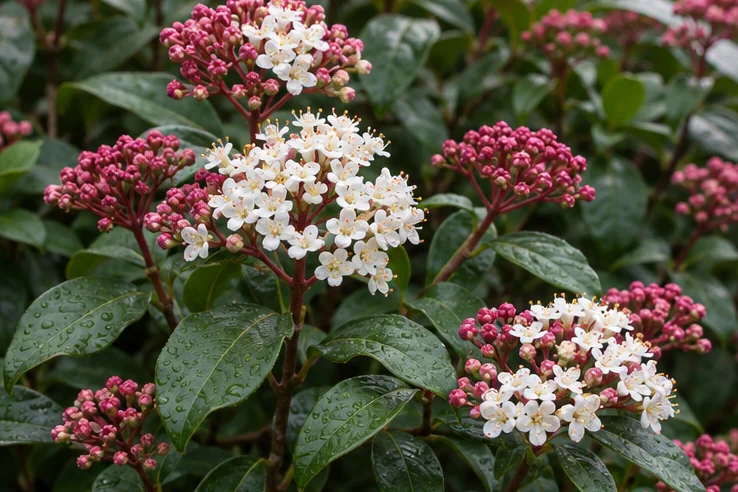
Grow laurustinus, Viburnum tinus, where a sheltered evergreen can fill out and you can see its flower buds in the cooler season. Clusters of pinkish buds can open to pale flowers. Timing varies with local climate and exposure. The foliage stays green after the flowers fade, which is useful if you’re planting for year-round cover.
Choose a freely draining site with suitable light, and consider how much winter wind the plant will receive. Laurustinus can grow in sun or partial shade in suitable conditions. Check the mature size and local winter performance of the cultivar, especially if you plan to put it by a door, path or low window.
Use the label to choose the right size and display
The straight species can become a substantial evergreen shrub. Look at the whole outline in a garden or an established nursery planting if you can. The eventual width matters as much as the height when you want winter flowers near a walkway. Leave working space to get around it as it fills in.
‘Spring Bouquet’ is a named selection. Search for ‘Spring Bouquet’ by name to compare its expected size and flowering habit in nursery or botanical listings. Pink buds and light flowers can give it two looks in a season. Ask which plants in your area have shown that pattern outdoors.
‘Gwenllian’ is another named selection. Its colored buds and pale flowers are part of its appeal, and it may develop decorative fruits. Compare expected size, flower and fruit interest and local performance before buying. Fruit set and timing can vary with the plant and conditions. Treat the fruit as an ornamental feature.
Check what the seller means by compact. Compare mature width and height with your own measured limits. If a plant in a low pot looks small, it can still need a wide area for its branches. Mark the walkway and the open space around nearby shrubs before committing to a mass planting.
Choose a site with winter exposure in mind
Stand in the spot during the colder part of the year if you can. A fence or building can screen wind and may also reduce light. Water can collect by a wall or beneath a downspout. Observe the soil after rain and think about how the location behaves when temperatures fluctuate.
Check where the flowers will be visible. From a kitchen window, a cluster near the front of a dark bed may stand out more readily than one at the end of a long drive. From a path, let the shrub retain enough width to show its branches while keeping the walking route open.
If the site falls near the limit of the plant’s cold tolerance, consult local sources. The RHS profiles describe performance in a UK context. Local U.S. nursery experience and established plants in similar yards can help you interpret exposure. A pot near an exposed entrance can face different conditions from shrubs growing in the ground.
Water with the original root ball in mind
Plant in suitable local weather and follow guidance for nursery shrubs. Set the plant at the appropriate level, water it in and check the root ball as well as the surrounding soil. A dry spell can affect the container-grown roots before the adjacent ground feels particularly dry.
Watch the shrub after the first heavy rain or several irrigation cycles. If the planting site holds water around the base, check how it arrived and where it can drain. The solution depends on the site. Watering less often may help where irrigation is the main source, while a low area receiving runoff calls for a different assessment.
When the plant is growing comfortably, keep monitoring during long dry periods. Compare leaf condition with the moisture you find in the soil. An evergreen shrub can show problems in foliage it holds across seasons, so a damaged older leaf and a decline in new growth give you different clues.
Shape the shrub around its flowers
If you want to keep as much of the flowering display as possible, prune lightly after flowering when work is needed. Look for the particular shoot that blocks a route or rubs a neighbor. Removing that shoot selectively can preserve the overall outline and much of the flowering growth.
For a screen, plan ahead so the shrubs have enough room to meet without requiring constant cuts. A formal hedge may sacrifice some buds or fruiting potential during shaping. Choose the look and function you want and match the intensity of maintenance to that goal.
Compare your expectations with the first winter display
Record when buds became conspicuous, when flowers opened and which side of the shrub showed the most growth. Also record exposure after any cold or windy period. These notes help you decide whether the position suits laurustinus and whether the cultivar is filling the space you planned. If growth is sparse, check light, drainage and cold exposure before changing several things at once.