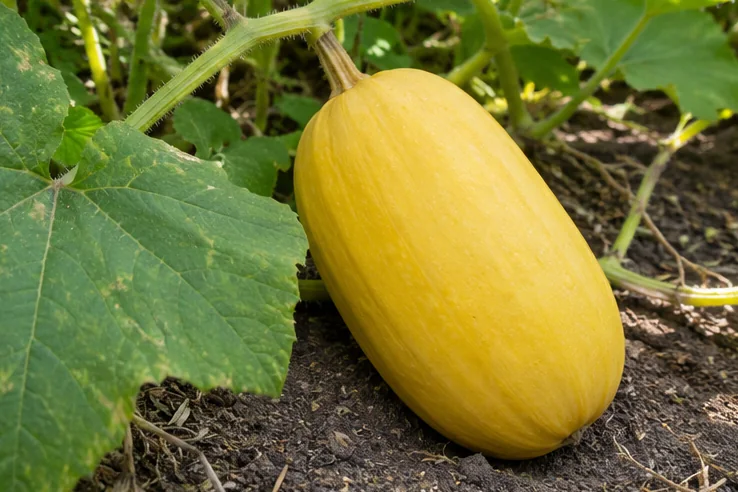
Spaghetti squash is ready when it has reached the mature color for its cultivar, the rind is hard and the stem is drying or becoming woody. On a typical yellow variety, look for the change from ivory to golden yellow described by Iowa State Extension. Some varieties are paler or patterned. Read the seed packet or nursery marker before using a particular shade as the deciding cue.
Check all three signs and the forecast. A fruit still developing on a healthy vine may benefit from more time if conditions are suitable. A mature fruit can be picked and handled before cold or damage reduces its storage quality.
Start with the variety color
Look at what your seed source describes as the finished fruit. Many spaghetti squash turn from a paler stage to yellow as they mature. Some mature with different tones or visible markings. Use the expected color for the named plant and compare fruits of the same variety. Light in the garden and dust on the rind can affect the impression from a distance.
Check several sides where you can see them without yanking on the stem. Look for overall development and whether the fruit has a reasonably uniform mature appearance for its type. A darker area where it sat can supplement the comparison. The typical ground-spot cue for acorn squash has a different use and should not be the standard for spaghetti squash.
Try photographing a fruit over several visits. Include the stem and the same side of the rind each time. A pair of pictures in similar light can show a shift you missed at first. If you planted more than one type, trace each fruit to the marked vine so you know which color description to apply.
Feel the rind and examine the stem
The rind should have become firm as the fruit developed. Iowa State Extension gives a hard rind and mature color as useful harvest cues. Examine the surface without breaking it. Check several sides for a uniformly hard rind, and look closely at any soft or damaged patches before sorting fruit for storage.
Look at the short stalk attached to the fruit for signs of drying and a woody texture. The condition of the adjacent vine can support your judgment. A stem that dried suddenly after the plant was damaged offers less reliable maturity evidence than a gradually developing fruit on an otherwise healthy vine.
Look for obvious cuts, soft areas, mold or cracking. Those affect the decision even on a mature squash. A damaged fruit may be unsuitable for storage. Do a second inspection after you pick it, when the underside is easier to see and you can sort it away from sound squash.
Decide whether to wait or harvest
Check the planting date and the packet’s days-to-maturity estimate to decide when to start looking. Weather and growing conditions can change the actual timing. If the color is developing, the rind is still comparatively soft and the plant is healthy, keep the fruit on the vine while the season allows. Check again in a few days.
Watch the forecast as temperatures fall. Follow local Extension advice to harvest winter squash before damaging cold. If the forecast forces you to clear the patch, separate the fruit that was fully mature from anything doubtful. Inspect each one for soundness and decide how to handle it based on its condition.
Ready fruit can be cut with clean pruning shears or a suitable tool while you support it. Iowa State Extension recommends leaving about an inch of stem attached. Carry the squash by its body. Avoid pulling or twisting the fruit off. Set it down gently to prevent bruises or damage at the stem end.
Use storage guidance for the type you harvested
Curing and storage advice can differ by winter squash type. Consult guidance that addresses spaghetti squash and the condition of the actual fruit. A recommendation for acorn squash or a long-keeping pumpkin may not carry over. Keep tags with different types so you can follow the appropriate advice for each.
An Oregon State Extension response gives 50 to 55°F for cool, dry, well-ventilated storage after curing. It puts storage life at roughly one to two months under suitable conditions. Set sound squash where you can inspect it regularly and remove fruit that develops mold, leakage or decay. The actual storage life depends on the fruit and your conditions.
If buying spaghetti squash, look for a hard, sound rind and any cultivar information on the label. Examine the stem and the end opposite it. You may have little information about the vine, so give the current condition more weight. Select a sound fruit sized for how you plan to use it.
Keep a quick check for the next harvest
Record the mature color, the condition of the stem and the feel of the rind when you pick the first sound fruit. Write down its variety and when it went into storage. The next time you grow that squash, the record will help you recognize it at maturity and plan your harvest around the local weather.