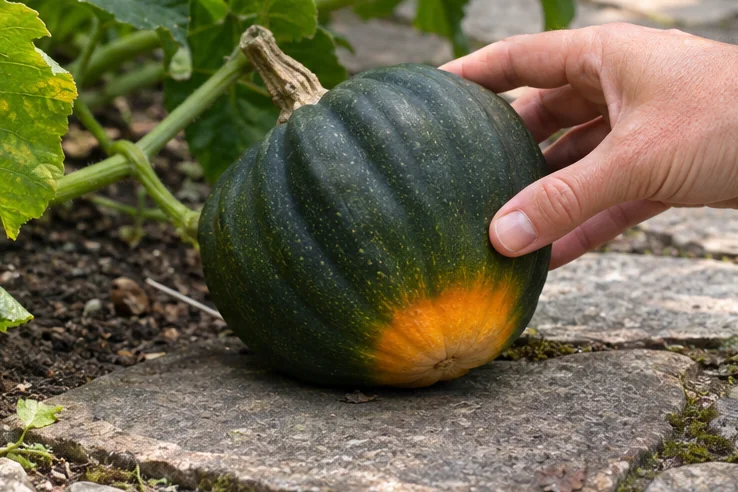
To judge a traditional green acorn squash, look for three clues together. The rind should be hard, the color should match a mature fruit of the variety and the stem should show signs of drying or becoming woody. A golden-orange patch on the side that rested on the ground can be especially useful. Firmness, color and stem condition tell you more together than any one glance at a dark green fruit.
The exact check changes a little if the squash is growing in your garden or sitting in a store bin. In the garden, you know where it rested and can check it again. At the store, use the appearance and condition you can inspect without damaging the fruit.
First, check that the rind feels hard and intact
Keep the fruit supported as you inspect its ribs. A mature winter squash has a firm rind. Check more than one area with a gentle touch. There should be no obvious softness, leaking or collapse. Avoid piercing the rind, especially on a fruit you intend to store.
Look across the skin for visible gloss. Winter squash often lose part of their shine as they mature. Light reflections, rain and handling can change the effect, so use dullness as a supporting clue. A dark squash that is still conspicuously glossy and easy to mark may need more time if the healthy vine and weather allow it.
A soft patch has to be interpreted in context. One spot can reflect a bruise or deterioration even when a fruit is mature. In a market, skip fruit with obvious damage or decay. In a garden, document where the spot was in contact with the ground and check whether it has changed. A ripe fruit can still be a poor storage choice when damaged.
Second, look at variety color and the ground spot
Check the variety name if you have it. The classic green type has a familiar deep rind, but acorn squash also includes lighter or patterned types. Use the expected mature color of the particular variety. Plenty of green can appear while other traits are still developing.
On a green type that rested on the ground, view the contact side. South Dakota State Extension describes a golden-orange spot there as a maturity cue. If the squash is on a vine, do this without twisting the stem or suddenly changing the fruit’s position. The ground spot may stand out against the darker body.
Squash grown off the ground can have little or no obvious contact spot. Some market fruit also leave you unsure which colored area was underneath. If you can’t tell whether there’s a ground spot, give more weight to the rind and stem. A patch or stripe in a variety’s normal pattern can look different from the area where the fruit rested.
If you are growing several labeled plants, photograph a green fruit before the ground spot develops. Check it again after a few days when you expect it to be nearing maturity. The sequence helps you see what the variety looks like at several stages.
Third, check the stem and its attachment
The stem of a winter squash can become drier or corklike as the fruit matures. In the garden, look at the short stem attached to the fruit, then follow it back to the main vine. A hard rind and mature ground spot are more convincing when the stem also appears to be changing with development.
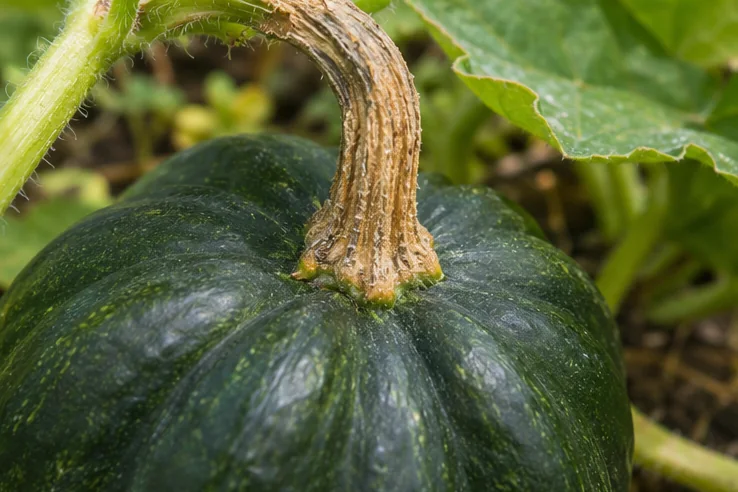
Plant stress can make shoots decline before all fruit are mature. If the vine looks damaged, look over the rest of the planting and the other squash. A dry stem after accidental damage deserves a different interpretation from gradual changes on a healthy vine. Check the rind and color in either case.
At the market, look for a firm stem attachment and sound rind around it. A broken stem can be a handling problem and may make storage more difficult. The state of a detached stem offers limited information about the original vine, so let the rind and overall condition guide your selection.
Put the three clues into a decision
If you find a hard rind, expected color and a dry-looking sound stem in the store, you have several positive signs for a usable squash. Choose one without decay and check that its size suits your meal. If you grow it and all three clues agree, move to your harvest decision based on weather and plant condition.
If only the top is dark green and the other cues are still developing, leave a fruit on a healthy vine longer when conditions allow. If only the stem looks dry, inspect the plant and rind before deciding. If the squash grew off the ground, compare it with a labeled example and use the firmness and stem clues together.
Mark fruits you intend to check again. A reliable conclusion comes from the current rind, variety color and stem, with the fruit’s growing and handling history used where you have it. This works better than using one color standard for every acorn squash.