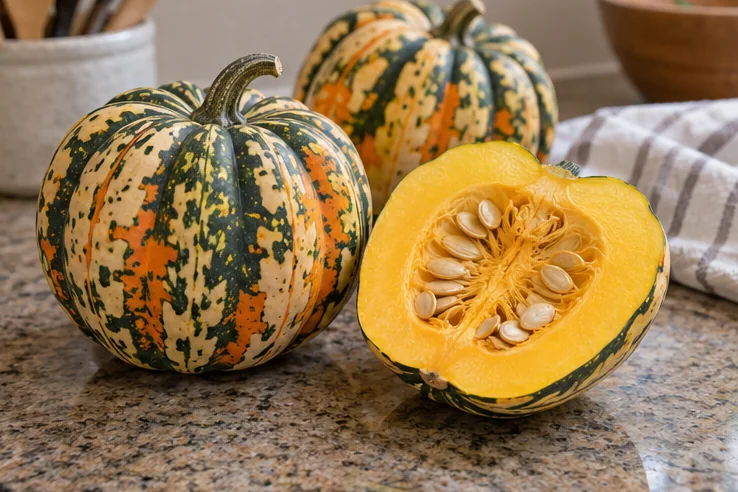
Carnival squash is an acorn-shaped winter squash with ridges and a patterned rind that can show cream, green, yellow or orange. You can recognize the shape and mixed colors at a market, then check whether the fruit is firm and sound. The markings vary from fruit to fruit. Use several cues to judge a fruit’s condition instead of treating the pattern as a maturity chart.
If you want to grow it, look for a seed packet labeled Carnival and give the plant a sunny growing spot with room for its habit. At dinner, use the ribs as a guide for cutting wedges, or roast the squash in halves and scoop out the cooked flesh.
Identify the squash by shape and label
Look for a broadly acornlike body with a narrowing end. The rind is divided into pronounced ribs, and a typical fruit has a mix of light and dark areas. The Cornell Vegetable Varieties resource includes Carnival as a named cultivar. Several market squash can look similar, so use the bin or seed label when you need to know the variety.
Color can fall along the ribs, interrupt them in patches or cover much of one side. Two Carnival squash can look different on the same counter. That variability is part of the reason to use firmness, stem condition and a general inspection for damage before buying.
A ripe winter squash should feel firm. Examine the rind and the areas around the stem and blossom end for soft spots, cuts or mold. A pale patch can be part of the normal coloring. An area that gives under gentle pressure, leaks or has visible mold is a sign to pass over the fruit. Choose a sound squash you have space to cook and serve.
Plan the garden around the named seed
Check the packet for spacing and a days-to-maturity estimate. The figure is a planning aid. Cool weather, planting time and plant stress can affect development. Find a position with useful direct sun and room for the foliage and fruit. Mark a walking route so you can check fruit without stepping on stems.
Start or sow according to the packet and local conditions for warm-season squash. If you are growing several varieties, label where each begins. As plants reach into one another’s space, stems can become hard to trace. A row marker and an early photo help you connect patterned fruit to the original plant later.
Watch the planting during growth and water as needed according to the soil. Aim for healthy leaves and give the fruit room to develop. Look for where a fruit rests and whether water collects around it. If the vine is covering a path, guide the next loose growth without damaging the stems already carrying fruit.
Use mature rind and the label together at harvest
A winter squash develops a harder rind as it matures. Look for a firm, fully developed fruit consistent with the seed description and compare the stem and surface with other fruit on the same planting. A colorful immature fruit can look attractive early. The combination of changes is more useful than a single stripe or spot.
When the fruit is ready, cut it cleanly from the vine and carry it without using the stem as a handle. Place sound fruit where it will be protected from bruises. Sort any damaged fruit for prompt assessment or disposal according to its condition. For acorn types, Iowa State Extension recommends skipping warm curing and storing sound fruit in a cool, dry, ventilated place. Follow the instructions for your particular seed if it is sold as a different type.
Record which fruits you bring inside first and why. If mature fruit and borderline fruit were picked together because of weather, keep them identifiable. Checking a mixed batch becomes easier when you know what each one looked like at harvest.
Try a simple roast to learn the flavor
Wash a sound squash under running water before slicing. Set it on a stable cutting surface and use a knife suited to a firm winter squash. Halve it and remove the seeds. If it is difficult to cut safely, choose a preparation method that fits your equipment and experience.
Roast halves until the flesh is tender, or make wedges that can be cooked and served individually. The ridged skin can help guide where to slice. A simple seasoning gives you a chance to taste the squash. After you know the flavor and texture, use it with other ingredients as a side, a filled half or a cooked component in another dish.
For a meal that uses one or two portions, choose fruit size according to the recipe and your preferences. Save the cultivar name if you enjoyed it. Patterned acornlike squash sold without a label can be hard to identify among varieties, and a clear seed or market label helps you find a similar one again.
Keep useful notes for the next season
Write down the variety source, sowing date, first harvest and how ripe fruit looked on your plants. Include a photo showing the rind and attached stem. If the vines occupied more space than expected or the fruit matured later than your growing window, make those the first questions you consider before buying seed again.