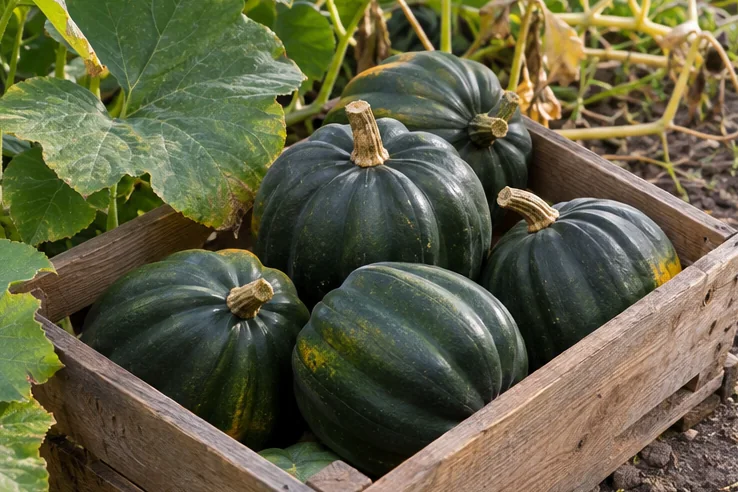
Pick acorn squash when the rind is hard, the fruit has reached mature color for its variety and the stem is beginning to dry or become woody. On classic green types, a golden-orange ground spot can be another strong clue. Watch the forecast as harvest approaches. Bring mature fruit in ahead of freezing conditions and assess borderline fruit separately if the weather forces an early pick.
Walk the bed before cutting. Decide which fruit will head for storage and which needs an earlier check or use. Then cut the squash from the vine with care and carry it without lifting it by the stem.
Set a harvest window from the plant and the forecast
Start checking fruit as the seed packet’s maturity estimate approaches. Growing conditions affect how close the plants are to that estimate. Look at several fruit on the same variety, since the oldest squash may be ready while another is still developing.
Find the ground contact side and view it without pulling on the vine. For a green acorn type, look for the typical golden-orange patch alongside a firm rind. Check the stem on the fruit as well. If the stem and skin have matured and the fruit is sound, decide which day suits the forecast and your work.
If a squash is still developing on a healthy vine and weather remains favorable, mark its location and check again. For a bed with many fruits, a simple diagram lets you distinguish a nearly ready squash from one you already checked. Do not rely on one plant’s condition to make the decision for a whole mixed bed.
Take frost risk seriously. Keep track of the local forecast and whether your bed is in a sheltered spot or a low point where cold collects. University Extension guidance recommends protecting winter squash quality from freezing. Pick mature sound fruit before the risk, then assess any borderline fruit apart from the main storage batch.
Cut each fruit without tearing the stem end
Use clean pruners or a suitable sharp tool. Move foliage aside so you can see the stem and where it joins the squash. Cut the fruit from the vine without pulling it free. Keep the attached stem intact according to crop-specific guidance and handle the fruit by supporting its body.
Set harvested squash in a shallow container or on a protected surface where it will not roll. Keep each fruit from knocking against another. Cuts and bruises can be hard to spot at first and matter for storage. Carry the squash without letting it roll or bump on the way from the bed to the sorting area.
Look over the rind again as you set each one down. Turn it enough to view the contact side and the end opposite the stem. A good storage candidate feels hard, has sound skin and shows no sign of rot. Record any blemish you want to watch and keep badly damaged or decaying fruit out of the storage group.
Skip the warm curing used for many other squash
Iowa State Extension advises against warm curing for acorn types. In winter squash guidance, curing usually means holding produce at a specific warm temperature and humidity for a period after harvest. That can suit some other types of winter squash. Iowa State says it can shorten storage life and reduce quality for acorn squash.
Keep the batches labeled if you also grow pumpkins or longer-keeping winter varieties. A single crate can easily mix together fruits with different guidance. An acorn type goes straight into the conditions recommended for storing sound acorn squash. Check crop-specific recommendations for your other harvests.
Look for a cool, dry, well-ventilated storage area. Iowa State gives about 50 to 55°F for winter squash storage and describes acorn storage life on the order of several weeks under suitable conditions. Check the actual temperature in your location. A garage, shed or enclosed porch can swing outside the desired range.
Sort for use and check the stored fruit
Place sound mature squash where you can inspect it. Keep more doubtful fruit separate and look at it sooner. If a fruit has leakage, mold or clear decay, remove it rather than letting it sit beside the rest. Earlier-picked fruit may be less suitable for holding, and each piece needs to be judged on its condition.
Plan meals with the shorter storage window in mind. Check the batch regularly, including the undersides of squash and their stems. If one begins to soften, pull it out and assess it. The storage estimate is a planning window. The actual fruit and storage conditions tell you how long the harvest keeps.
At the end of harvest, note the date you began picking, the cues that helped identify mature fruit and any early freeze that affected the decision. Include the variety and how long the sound squash kept in your space. Use those notes to schedule future checks as the next crop begins to darken and harden.